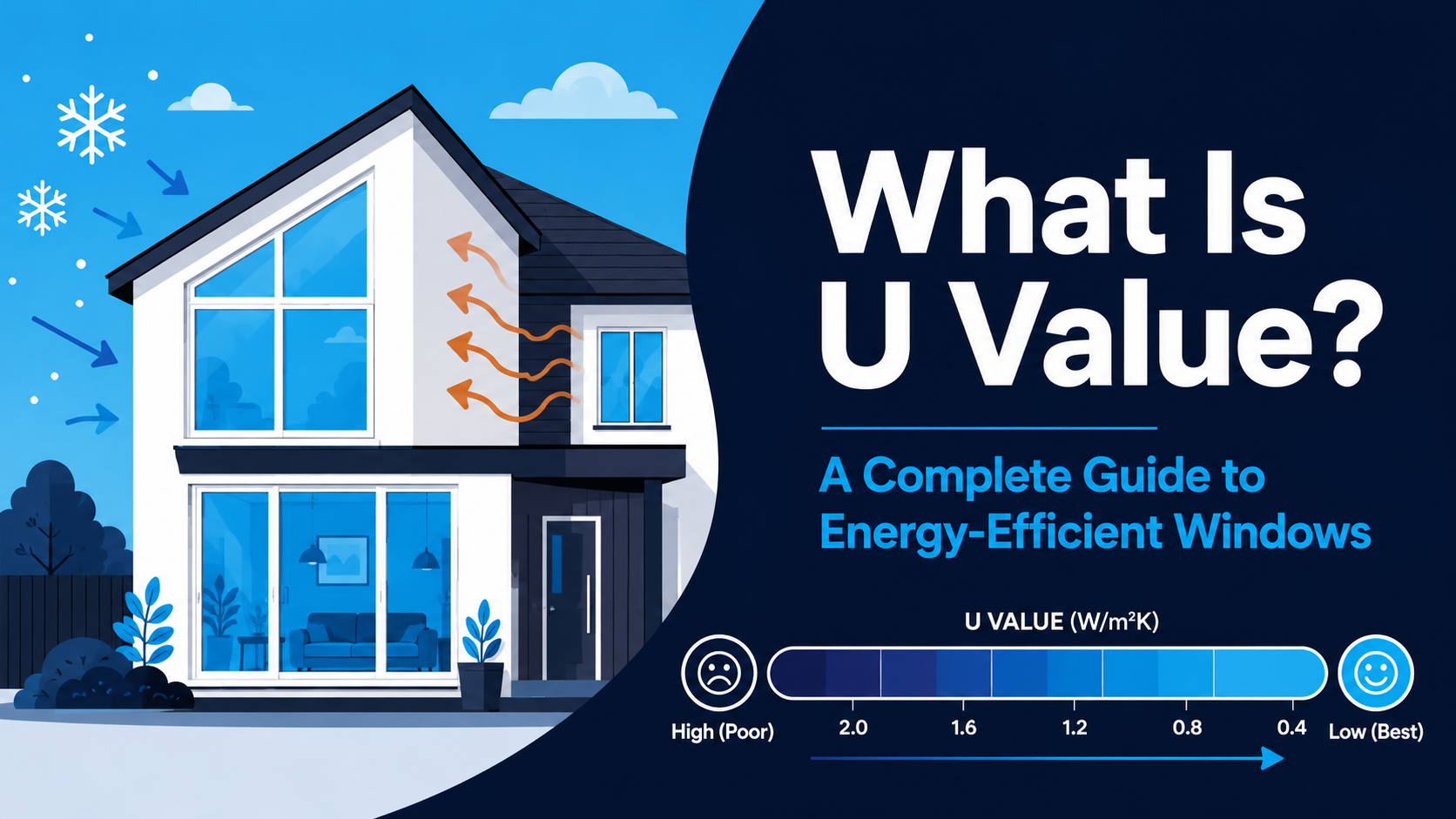
U-value is a key measure of heat loss in windows, where lower values mean better insulation and energy efficiency. It compares single-, double-, and triple-glazing, showing how modern windows reduce heat loss, lower energy bills, and improve comfort. The blog also covers factors affecting U-values, UK building regulations, and the benefits of energy-efficient windows, including reduced carbon emissions and higher property value.
U Value Explained: Choosing Energy-Efficient Windows for Your Home
Triple Glazing U Values | Double Glazing U Value | Window Replacement
As energy prices rise across the UK, many homeowners seek ways to improve energy efficiency and reduce household heating costs. One upgrade with a good return on investment is installing energy-efficient windows. U Value is one of the most important performance indicators for windows.
Understanding U-value is important because it directly relates to heat loss through a window. Less heat loss equates to lower energy bills and less of a negative impact on the environment. Replacing old windows, constructing a new building, and improving the insulation of a home are all scenarios that require consideration of U Values.
This guide provides all the information necessary on the U Value, its relationship to window performance as well as UK building regulations, and the selection of the most energy-efficient windows for UK homeowners.
What is U-Value?
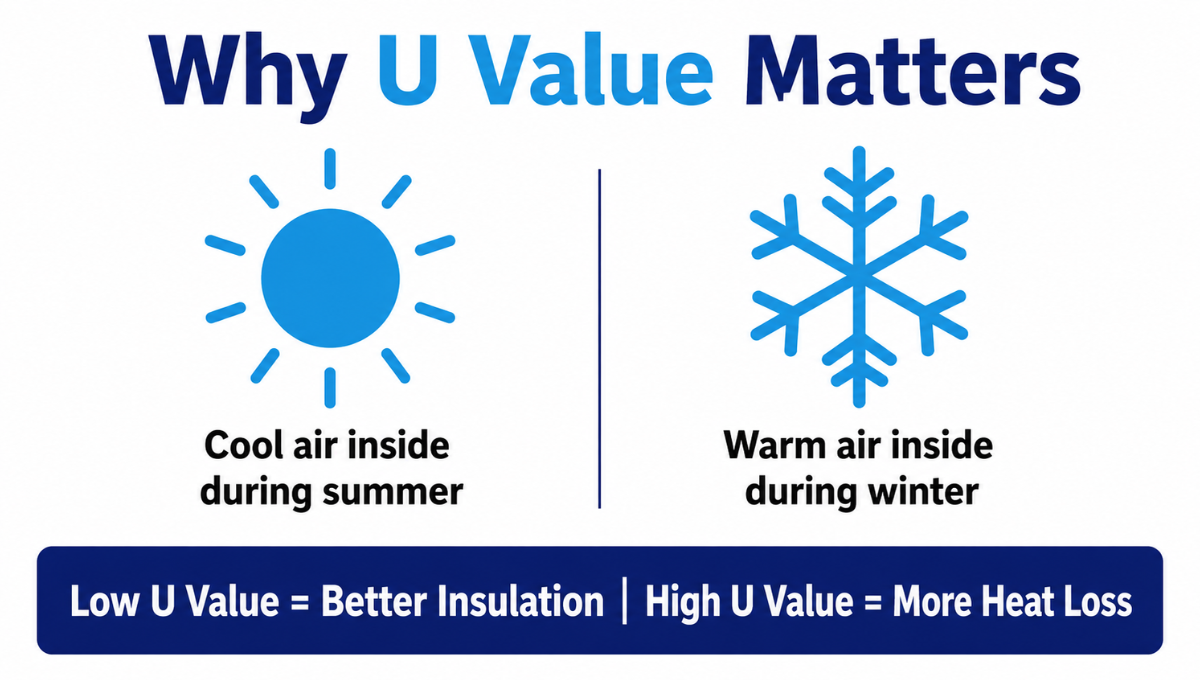
The U Value is a measure of thermal transmittance. It measures how much heat a window lets through.
In Simple Terms:
- Low U Value = Better Insulation
- High U Value = More Heat Loss
- A low U Value increases energy efficiency
U Values are measured in W/m²K (watts per square metre per degree Kelvin). It measures how much heat is let through one square metre of a material in a temperature difference of one degree between the inside and outside.
Why is U Value Important for Windows?
There are extended stretches of cold weather in the UK for most of the year. Heating systems must work especially hard in the winter to ensure warm, comfortable temperatures inside. If windows leak heat, homeowners have to spend more to heat their houses.
U Value Impacts the Following:
- Heat retention
- Energy efficiency
- Cost of household energy
- Reducing carbon emissions
- Comfort of the indoor environment
- Value of the property
According to studies, windows that are not well insulated can cause significant heat loss in the home. This means that the energy performance of the home can benefit greatly from the installation of windows with low U Values.
Understanding Heat Loss Through Windows
To comprehend the significance of Uw value, understanding heat loss through windows is essential. Heat loss occurs by three main transfer methods:
Conduction
Conduction is the transfer of heat through the solid materials of the window and window frames. In winter, the air in the room warms the surface of the window, and then the heat moves through the window and is lost to the external environment. Heat transfer by conduction is reduced in modern energy-efficient windows because of better glazing technologies and frame insulation.
Convection
Convection is caused by the circulation of air around window surfaces. Air that is in contact with the window cools and sinks. This creates a current that also loses warm air in the process of convection. Triple and double glazing are effective at reducing convection as they seal an insulating gas in between the glass.
Radiation
Heat transfer from radiant sources is the transfer where the energy moves in the form of infrared radiation. In the absence of special coatings, heat can easily radiate through standard coated glass. Low-emissivity (Low-E) coatings are designed to reflect heat into the room to decrease radiative heat loss.
How are U Values Calculated?
Many believe that the U value is exclusive to the glass component of a window. This is not the case. The overall U-value calculator of a window accounts for several factors, including:
- Glass panes
- Window frames
- Spacer bars
- Seals and gaskets
- The effects of thermal bridging
- Window design
This means that if two Windows have the same glazing, they may still have different U Values based on frame materials and the quality of the manufacture. The overall Ug value of a window is the best way to assess the thermal performance of a window and should be the only measure used when comparing products.
Typical U Values for Different Window Types
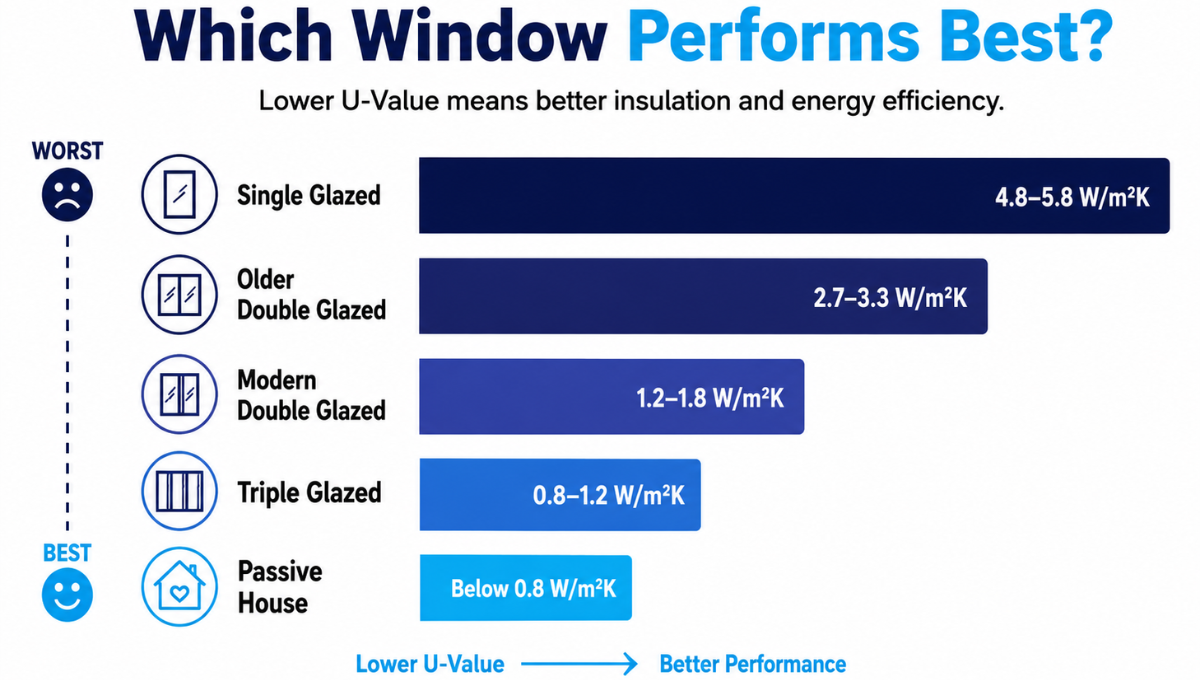
Windows today provide excellent thermal performance compared to those made a few decades ago.
Single-Glazed Windows
U Value: 4.8–5.8 W/m²K
Single-glazed windows, common in older UK buildings, are poorly insulating. They are poor at insulating structures and contribute to heat loss. They are also the source of cold spots in the vicinity of the windows.
Older Double-Glazed Windows
U Value: 2.7–3.3 W/m²K
Early double-glazing systems are an advancement on single systems, but don’t meet modern efficiency standards.
Modern Double-Glazed Windows
U Value: 1.2–1.8 W/m²K
Double-glazing offers superior performance and is the most common system in the UK.
Triple-Glazed Windows
U Value: 0.8–1.2 W/m²K
Triple systems offer even greater performance by having three panes of glass and two insulated spaces.
Passive House Windows
U Value: Below 0.8 W/m²K
These windows are built to the standards of ultra-high-performance windows for low-energy and passive buildings.
U Value vs Window Energy Rating
U values and window energy ratings (WER) are terms that a lot of homeowners mix up. They deal with different aspects of performance even though they are related.
U Values
Represent the amount of heat that is lost through the window. A smaller number reflects a window with better U-value insulation.
Window Energy Rating (WER)
Energy efficiency can be assessed through various measures, including:
- Heat Loss
- Solar Heat Gain
- Air Leakage
Window Energy Ratings are Graded in the Following Categories:
- A++
- A+
- A
- B
- C
- D
- E
A window that has a great U Value is likely to get a strong energy rating, but air tightness and solar gain will also impact the rating.
UK Building Regulations and U Values
The UK government has been tightening regulations across various sectors, including the construction industry, to improve a building’s energy efficiency and reduce carbon emissions.
Part L of the Building Regulations focuses on fuel and power consumption in buildings. With replacement windows, the products that homeowners choose need to comply with the most recent minimum energy-performance standards.
Most Windows Achieve Compliance When They Have the Following:
- U Values of 1.4 W/m²K or lower
- The appropriate Window Energy Ratings
Window installers need to offer customers the regulatory compliance documentation. Not complying with the standards may result in challenges for homeowners when selling a house and when getting a building approval.
Factors That Influence Window U Values
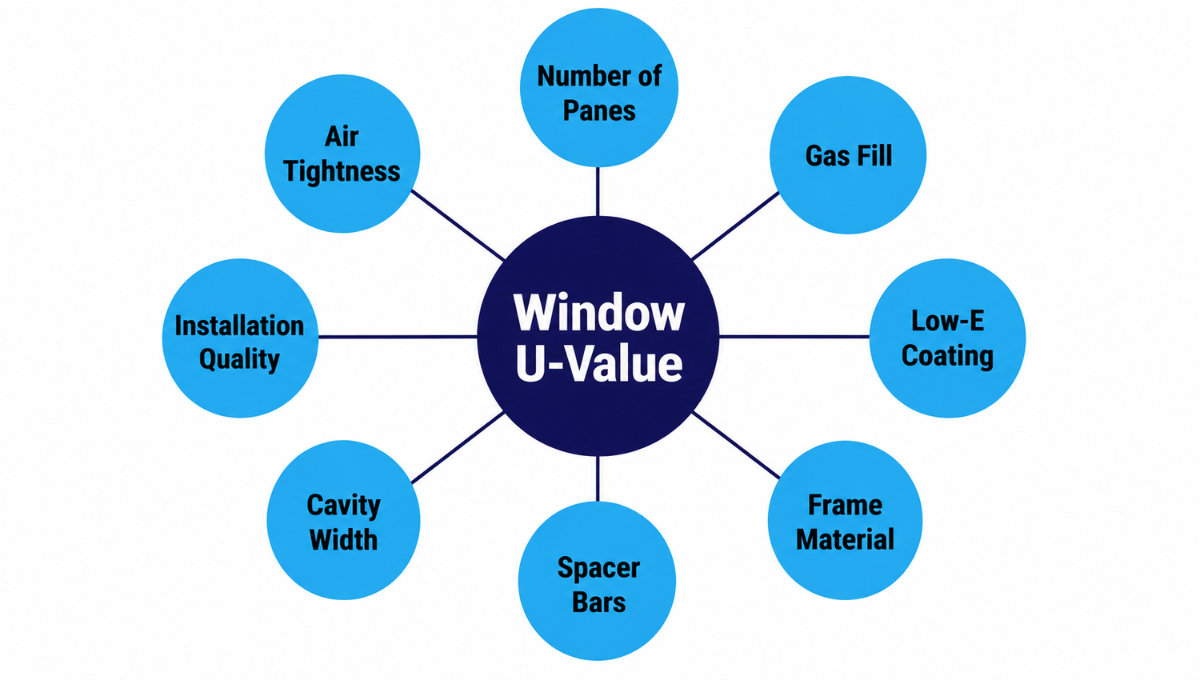
Several important factors influence window thermal performance.
Glazing Types: The quantity of glass panes optimises insulation and energy efficiency.
Single Glazing: Single-glazed windows are also not seen as energy efficient and have inadequate heat transfer resistance.
Double Glazing: Double glazing has two glass panes with space and window insulation that greatly improves thermal performance.
Triple Glazing: Triple glazing has three glass panes and two insulated spaces with great insulation and sound performance.
Gas-Filled Cavities: Spaces in between glass panes that are filled with inert gas improve insulation and reduce heat transfer.
Argon Gas: Argon gas is a cost-effective and commonly used insulating gas.
Krypton Gas: Krypton gas has a higher thermal performance than argon gas, but is more expensive.
Xenon Gas: Xenon gas has the highest insulation of the three gases and is typically only found in high-performance glazing.
Low-E Glass Coatings: Low-E glass coatings are thin metallic coatings on glass that reflect heat back and therefore increase the thermal performance of glass.
Window Frame Materials: The material used to construct a window frame can impact the overall thermal performance and U-values.
uPVC Frames: uPVC frames are cost-effective, long-lasting, and provide great insulation.
Timber Frames: Timber frames can provide insulation as well and enable a more traditional look.
Aluminium Frames: Thermal breaks employed in aluminium frames can minimise thermal transfer.
Composite Frames: Composite frames can be constructed to enhance thermal performance, insulation, and strength.
Warm Edge Spacer Bars: Spacer bars employed between the panes of glazing provide better insulation, decrease heat loss around the panes, and decrease condensation.
Benefits of Choosing Low U Value Windows
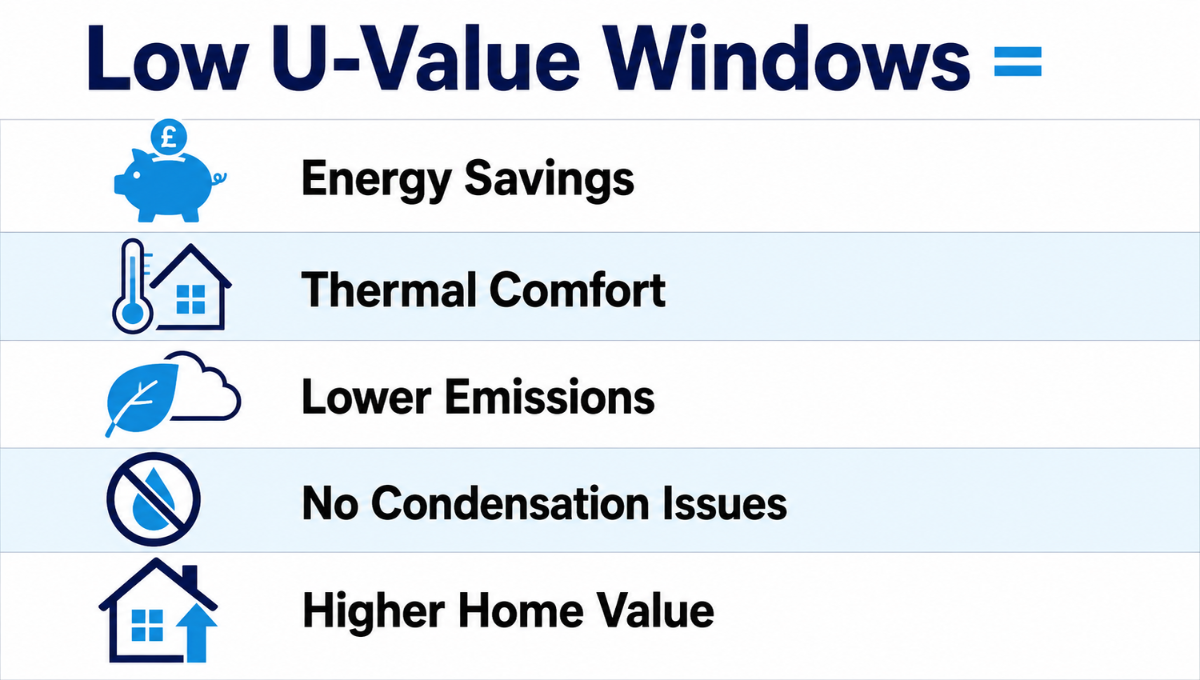
Investing in high-performance home insulation windows offers numerous long-term advantages.
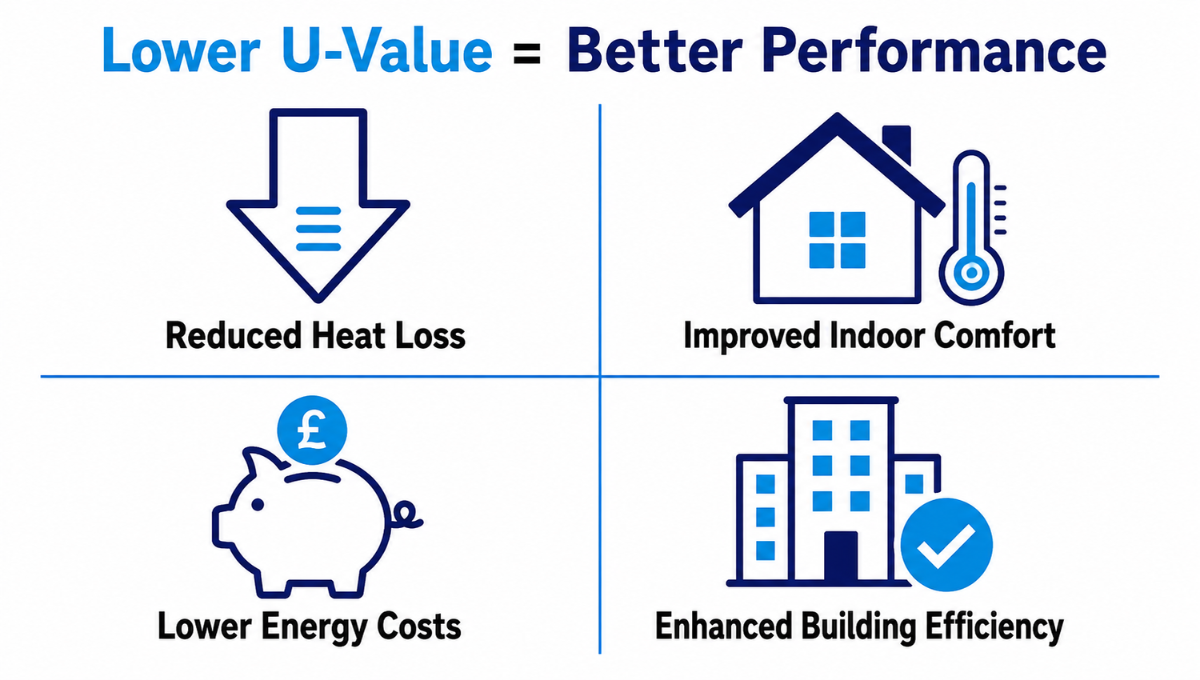
Reduced Energy Bills
With lower U-values, heat loss from the home is diminished, which allows heating
systems to be more efficient. In turn, energy use goes down, and utility bills go down. Much of the time, homeowners see real savings after replacing older windows.
Improved Indoor Comfort
Cold drafts and temperature changes can create discomfort and, in some cases, make parts of your home unlivable. Window beading designed to use less energy helps make the distribution of temperature in indoor spaces more even, and eliminates cold drafts. This improved thermal comfort helps create a more livable environment year-round.
Lower Carbon Emissions
There is a direct correlation between energy use and household carbon emissions. The continuing efforts to bring the UK to net-zero mean that energy-efficient windows help create more sustainable and environmentally considerate homes.
Reduced Condensation
Condensation occurs when warm air meets cool surfaces. Low U-value windows keep the warmth of the interior side of the glass. This makes it less likely that water droplets will form along the interior and create damp spots along the frame that would be unhealthy and potentially harmful to the interior as well as the frame.
Enhanced Property Value
Home energy efficiency is becoming a greater concern and priority for home buyers. Homes that have modern, energy-efficient windows have better EPC ratings, are more attractive, and sell for a greater value.
What is Considered a Good U Value?
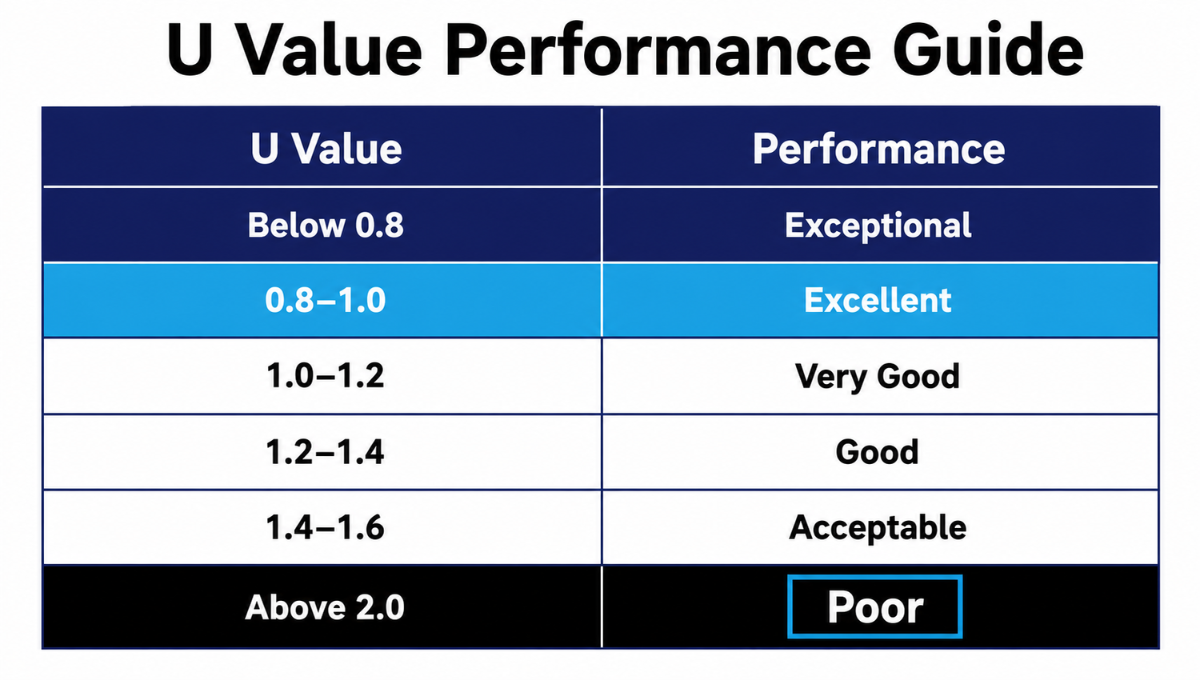
A window with a U-Value lower than 0.8 is rated as exceptional as far as insulation and energy efficiency are concerned. U-Values from 0.8 to 1.0 are rated as excellent, while U-Values in the range of 1.0 to 1.2 are rated as providing very good thermal performance. U-Values in the 1.2 to 1.4 range are rated as good, while 1.4 to 1.6 are rated as providing fair insulation. Values above 2.0 are assessed to be poor, with greater heat loss and lower energy efficiency. As a rule of thumb, the lower the U-Value is, the better the window is at providing insulation.
Tips for Choosing Energy-Efficient Windows
Before buying replacement windows, you should:
Compare Overall Window U-Values
Make sure you are looking at the entire window U-Values, not just the glass.
Verify Certification
Select windows that have been tested and certified in independent studies for thermal performance.
Consider Your Property Type
Your windows should be suited to your home’s age, location and style. Prioritise Installation Quality
Different homes have different needs based on the home’s age, location, and type of construction.
Evaluate Long-Term Costs
Consider costs throughout the lifecycle of the product and the energy savings over time, rather than the initial costs of the product.
Future Trends in Energy-Efficient Windows
Window technology evolves rapidly. Some of the innovations are:
- Vacuum Insulated Glazing
- Electrochromic Smart Glass
- Advanced Low-E Coatings
- Solar Control Technologies
- Integrated Energy Generating Windows
Advancements in window technology are expected to improve thermal efficiency and drastically reduce household energy consumption.
Secure Glaze: Expert Energy-Efficient Window Installation
Secure Glaze designs high-tech security and energy-efficient window systems. The company focuses on providing energy-efficient glazing technology for their U Value window and frame systems. With higher thermal performance, customers won’t experience drafts and can enjoy a more comforting and consistent indoor temperature.
The focus on lower U Value systems allows experts at Secure Glaze to achieve a higher level of insulation than the current standards set by the UK building regulations. The technology used by Secure Glaze consists of modern double or triple glazing and energy-efficient spacers that are installed with the frame to optimise fit.
Conclusion
U Value is an essential measurement when assessing energy-efficient windows for your UK home. U Value signifies the amount of heat loss through a window, making it a measure of insulation efficiency. A upvc window with a lower U Value will have a greater capacity to retain heat and therefore enhance the overall energy efficiency of a home.
Modern window seals and triple glazing with a low U Value mean windows are better insulated, and the heat loss is reduced. These windows can lower heating bills, reduce condensation, enhance comfort, and are environmentally sustainable. By learning and understanding more about U Values, UK homeowners can have peace of mind that their investment will positively impact the comfort of the home and increase the market value of their home. Contact Us for a free consultation on our energy-efficient windows and see how we can make your home more comfortable, improve performance, and even add value.
FAQS
What does a window's U Value indicate?
The U Value of a window measures the heat transfer that occurs throughout the window unit, including both the glazing and the frame. Competitive U Values show a window unit that is more insulating and energy efficient.
What is the ideal U Value for replacement windows in the UK?
Generally, the preference of the market is for windows to have a U Value of 1.0 to 1.4 W/m²K. Alternatively, premium triple-glazed windows can have U Values of less than 1.0 W/m²K, with added energy efficiency.
Can windows with a low U Value actually reduce energy bills?
Certainly. Windows with a low U Value equate to lower heat loss, which lessens the workload of the heating system to keep a building at a pleasant and balanced temperature. Ultimately, low U Value windows can reduce energy bills and enhance the comfort of a home.