Compliance with building regulations is important for various reasons. When property owners or homeowners plan to replace or install doors and windows, they must ensure proper compliance. The level of compliance strictness also depends on your project’s complexity level. These regulations set standards to make your environment and spaces comfortable and energy-efficient. But learning about them, choosing the right window supplier, and ensuring proper compliance for projects is vital.
Building Regulations UK: What You Need to Know Before Installing UPVC Windows & Doors?
Windows and Doors | Window Ventilation | External Doors
Usually, homeowners think that installing triple glazing or other glazing options ensures compliance with building regulations. But this simple misconception leads to multiple compliance failures, costly replacements, legal action, and a decrease in property value.
But compliance is not just about choosing the right glass quality. Instead, you have to cover energy efficiency aspects, ventilation preferences, safety glazing film, and different glazing options. Ensuring accurate certifications also makes a huge difference. Learn about such things before installing doors and windows.
What Are Building Regulations?
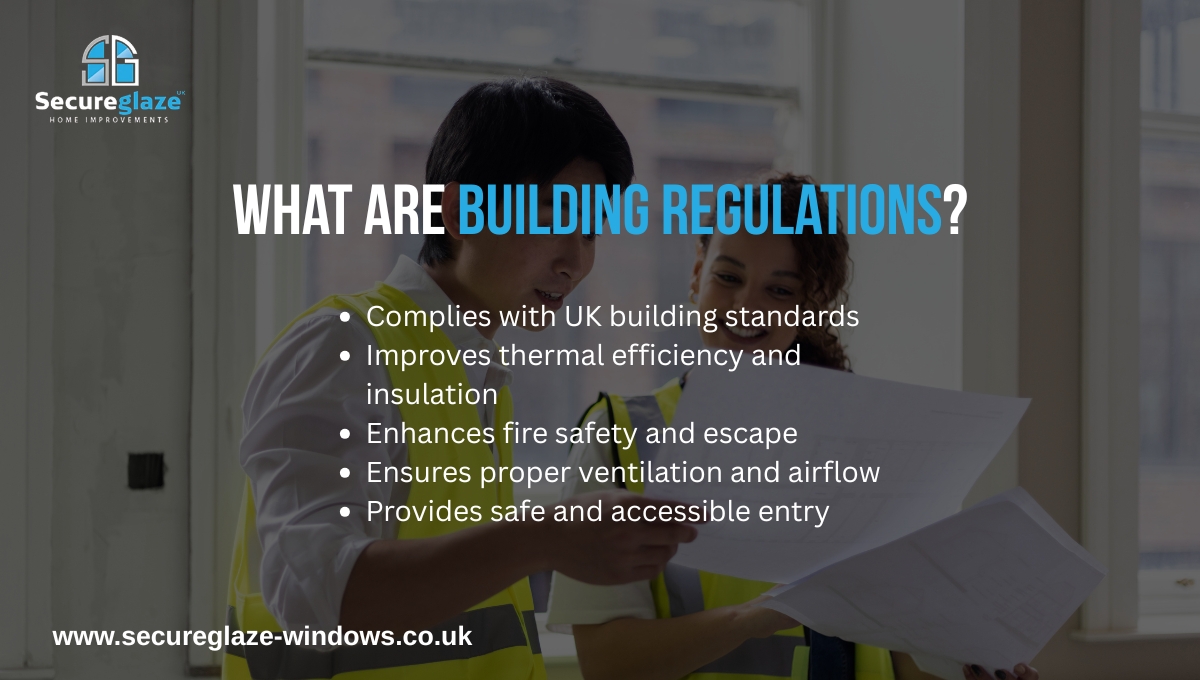
Building regulations in the UK are legal regulations set by the UK government. These regulations help ensure that the construction and renovation procedures meet the specific standards.
Such regulations can apply to different aspects of a building, like its structural safety, fire safety, energy efficiency, ventilation, accessibility, security, and glazing security. For window and door replacement and installation, the procedure must comply with specific sections of the building regulations.
These regulations help to keep the buildings safe, comfortable, energy efficient, and suitable for the residents.
-
Thermal Heat Loss
Proper thermal efficiency is necessary for your glass windows and doors. To limit the amount of heat loss through your windows and doors, building regulations require new windows and doors to have a certain amount of thermal resistance. It is usually measured in the form of a U-value.
-
Safety Glazing
For different doors and UPVc window styles, safety glazing is necessary in critical locations to cover injury upon impact. Glazed doors with glass within as a whole or half coverage must be up to 1500mm above floor level. Considering the same differences for the door side panels and low-level glazing is also necessary.
-
Fire Escape
It means the ability to handle the spread of the fire and having means of escape through the windows and doors. External windows and doors should be self-shutting and sealed. It helps in preventing the fire from spreading to other residential areas.
If windows and doors are selected with low resistance or undetermined fire resistance, they are installed in areas with proximity to the property boundary. Property owners must also ensure to have a window opening large enough to escape in emergencies.
-
Ventilation
Proper ventilation is also needed to maintain accurate airflow throughout the property. It’s possible through your windows and doors. Window trickle vents and other forms of ventilation help understand the specific ventilation type.
But considering your specific window and room position is also necessary for this purpose. Usually, bathrooms and kitchens are areas that produce more steam and require additional ventilation, so proper preparation is beneficial.
-
Simple Access to the Buildings
When you’re replacing the doors or fitting new ones, ensure the thresholds are level. It ensures that people with disabilities, especially those with mobility issues, can get easy access without struggling or needing extra help.
Why Building Regulations Matter for UPVC Installations?
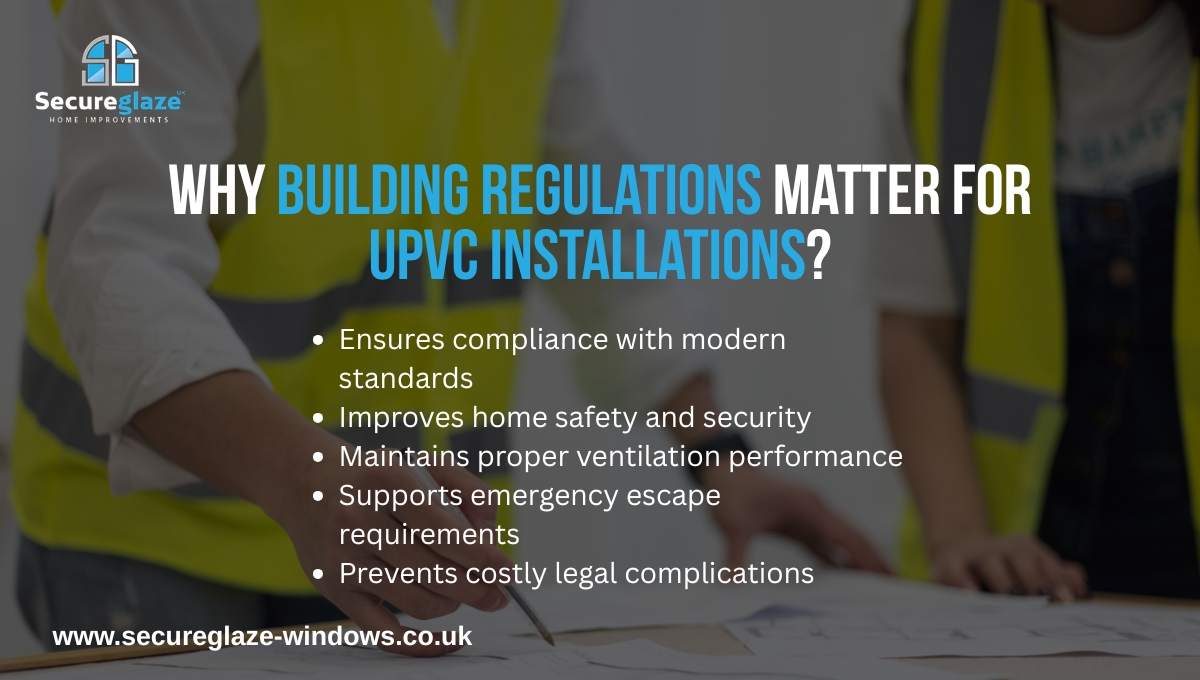
Usually, homeowners think that they don’t need to follow regulatory compliance for door and window security and replacement purposes. But most replacement procedures fall under this category, as windows and doors massively affect your property’s various features.
Considering heat retention, ventilation performance, security standards, emergency escape routes, structural integrity, etc., all are affected during such projects.
Proper compliance ensures the installation follows modern standards while helping homeowners avoid future legal and expensive issues.
Building Regulations Requirements at a Glance
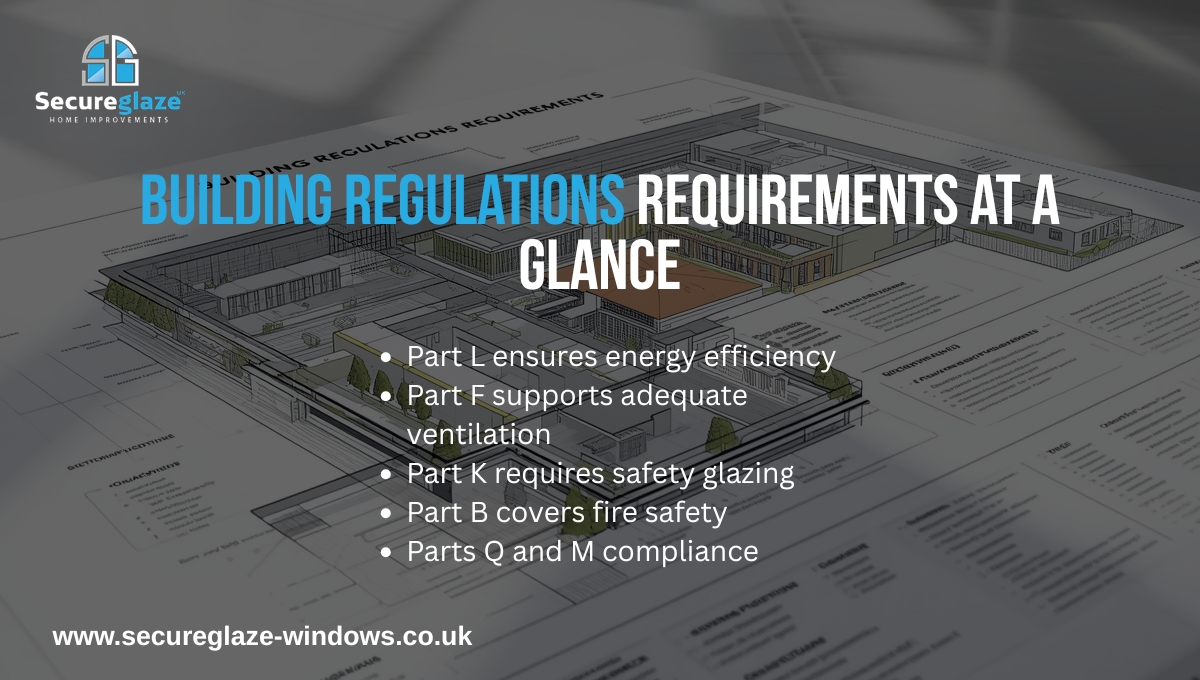
| Regulation Part | Area Covered | Main Requirements for UPVC Windows and Doors |
| Part L | Energy Efficiency | Minimum thermal performance and insulation |
| Part F | Ventilation | Adequate airflow and trickle ventilation |
| Part K | Safety Glazing | Toughened or laminated glass where required |
| Part B | Fire Safety | Suitable emergency escape openings |
| Part Q | Security | Enhanced security measures for new homes |
| Part M | Accessibility | Accessible doorways and thresholds |
Do You Need Building Regulation Approval?
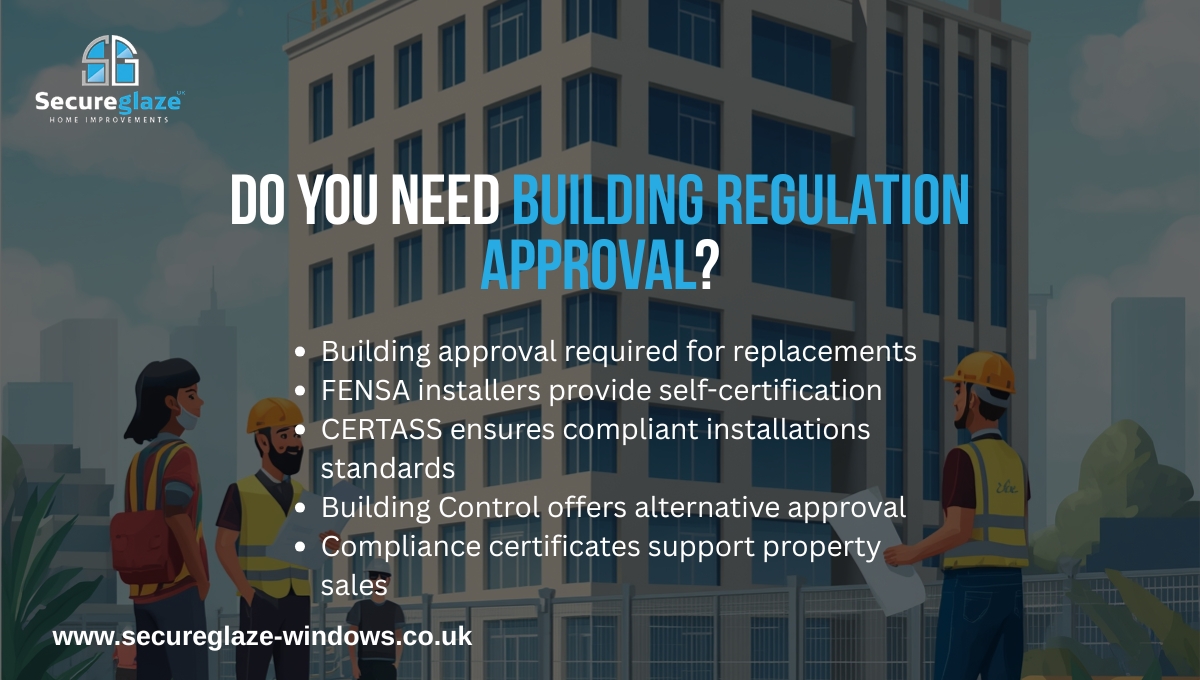
Mostly, replacing external windows and doors requires compliance with Building Regulations. But you can achieve approval in the following two ways.
Use a Competent Person Scheme Installer
Many homeowners choose installers registered under approved schemes such as:
- CERTASS
Such installers self-certify that their work complies with building regulations. Once the installation is completed, the homeowners get a compliance certificate. It’s usually the easiest and most affordable option.
Apply Through Local Authority Building Control
When the installer is not registered under an approved scheme, homeowners should notify their local authority before starting the installation of internal windows. Building Control officers can examine the work and issue approval after compliance confirmation. But extra fees and administrative procedures are involved in this option.
Understanding U-Values for UPVC Windows and Doors
One of the most important aspects in building regulations for internal doors is considering U-values.
What Is a U-Value?
This value measures how accurately a building element helps avoid heat transfer. Lower U-values mean improved insulation performance. Modern UPVc standard window sizes are manufactured with low U-values and compliance with Part L requirements.
The benefits of U-value in your windows and doors mean lower energy bills, improved comfort, decreased carbon emissions, and improved property value.
Ventilation Requirements for Replacement Windows
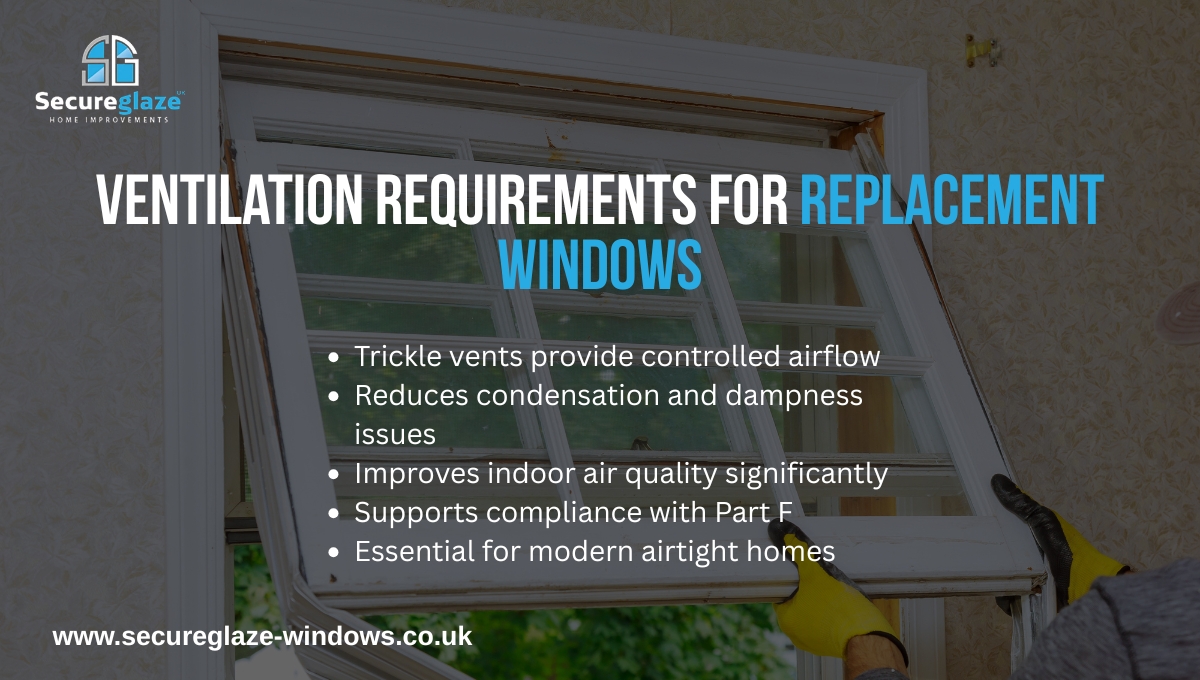
Ventilation regulations have gained more importance over the years, especially for a 2nd floor window. Energy-efficient homes are usually airtight, leading to increased condensation and dampness issues. It happens due to improper ventilation.
Nowadays, modern replacement windows require trickle vents. They are small openings. They allow controlled airflow without needing the window to be opened completely.
Investing in a trickle vent offers various benefits, like improved air circulation, reduced condensation, improved indoor air quality, compliance with Part F, etc. Before replacing windows, choosing a certified supplier like Secure Glaze, and understanding your current ventilation system is necessary.
Differences Between Building Regulations for New Installations and Replacements
Homeowners can improve the overall resale value of their properties through a professional building regulations certificate. But learning the compliance variations between new and old window and door installations and replacements can simplify these procedures for homeowners.
-
Thermal Performance and Energy Efficiency Requirements
The thermal performance measured by the U-value is the primary difference between new and old windows and doors installation and replacement.
New installations require highly insulating and incredibly efficient installations. Lower U-values in the window glass are preferred, but the level of lowerness depends on the specific window area.
On the other hand, for replacing existing doors and windows, upgrading to a maximum U-value of 1.4 W/m²K is required.
-
Ventilation and Airflow Variations
Older buildings rely on natural drafts, while new buildings and installations are airtight. Old windows and doors usually lack modern ventilation features.
On the other hand, new installations for windows and doors now legally require trickle vents. It helps ensure continuous background airflow. This feature is essential for preventing condensation and black mould buildup.
-
Fire Safety
Older installations for windows and doors are not compatible with the modern sizing and height requirements. These standards stipulate that an escape window should have an opening area of 0.33m² with a clear cill height of not more than 1100mm from the floor.
On the other hand, modern window and door installations or replacements require maintaining or exceeding the escape capacity of the original setup. They are mandatory for all the upper-floor bedrooms.
-
Safety Glass and Security
Older windows and doors’ glass is mostly of lower-level quality and untoughened. Such equipment can cause safety threats to your family in case of shattered incidents. For new window and door installation or replacement, homeowners have to ensure strict security standards.
They must make the windows and doors accessible and equip them with laminated glazing. Installing toughened or laminated safety glass around critical locations on the windows and doors is also necessary for simple access with double security.
-
Easy Building Accessibility
New external doors should meet wide and clear opening widths for people with disabilities, especially wheelchair users.
Replacement doors should not further negatively affect accessibility. If the previous installation had a balanced threshold, the replacement installation must also have a balanced threshold.
Special Considerations for Conservation Areas and Listed Buildings

Other than regular building regulations, homeowners should follow additional planning controls. It happens when the property is located within conservation areas, natural parks, areas with incredible natural beauty, and listed buildings.
Listed Buildings
Listed properties usually demand Listed Building Consent before replacing old windows and doors. Authorities can demand traditional designs, timber alternatives, heritage-style glazing, and preservation of original architectural features. If they fail to obtain consent, it can lead to intense enforcement action.
Conservation Areas
Replacement windows must match the appearance of the current features. Homeowners can consult with local planning authorities before starting the procedure.
What Happens If Building Regulations Are Ignored?
Homeowners can face various issues if they choose to ignore building regulations.
- Local authorities can demand corrective work when installations fail to ensure compliance. It leads to wasting time, money, and resources.
- During property sales, solicitors demand evidence of building regulation compliance. When you have missing certificates, they can cause delays in transactions or decrease buyer confidence.
- Improper compliance in installations can increase heating costs and affect the overall comfort of the environment for the residents.
- When you have improperly installed doors and windows, they can create issues related to fire escape, security, structural stability, and glass safety. Proper compliance helps avoid such risks while keeping the residents protected, and your property’s value increases.
Must-Have Documents Homeowners Should Keep
Once the installation is completed, homeowners should get all the related documents. You may need these documents or certifications while selling or remortgaging your property. Important documents or certifications include:
- FENSA certificate.
- CERTASS certificate.
- Building Control approval documents.
- Product warranties.
- Installation guarantees.
- Product specification sheets.
Tips for Ensuring Compliance

For smooth compliance with building regulations, homeowners should consider the following factors.
- They should work with reputable installers who know about the latest building regulations. You can also ask them about how to secure ground-floor windows.
- Inspect whether the installer belongs to a Competent Person Scheme such as FENSA or CERTASS.
- You must always get compliance certifications and warranties once the installation is completed.
- Discuss proper ventilation requirements during product selection.
- Having proper records of the building regulations helps avoid complications in the future for property sales and other procedures.
Energy Efficient Windows and Doors from Secure Glaze
Choosing reliable window and door suppliers who follow updated building regulations matters more than you can imagine.
- Secure Glaze is a professional door and window supplier in the UK that follows strict regulations for a smooth installation and replacement procedure.
- We are the best double-glazing door and window installer in the UK.
- We also provide energy efficiency, durability, visual appeal, high-quality, and top-notch security to our clients, whether they choose our installation, replacement, or repair services for their doors and windows.
- Reach out today for further details and ensure compliance before starting any installation procedures.
Conclusion
To conclude, building regulations compliance for installing UPVc windows and doors is a necessary requirement for homeowners. Whether you’re planning a replacement or installation, ensuring compliance helps improve your property’s energy efficiency, security, comfort, and visual appeal. Compliance helps you cover these aspects efficiently. But choosing reliable suppliers for windows and doors is vital, so contact us for further details. Investing in better compliance ensures durable outcomes.
FAQs
Do I need building regulation approval to replace UPVC windows and doors?
Yes, usually, for the replacement and installation of windows and external doors, compliance with UK Building Regulations is necessary. Approval is given through a Competent Person Scheme such as FENSA or CERTASS, or via your local authority's Building Control department.
What is a FENSA certificate, and why is it important?
This certificate confirms your new windows and doors have been installed in compliance with Building Regulations. It acts as proof of compliance and is usually required for selling or remortgaging your property.
What happens if my UPVC window or door installation does not comply with Building Regulations?
Installations with non-compliance lead to enforcement action by local authorities, expensive remedial work, problems while selling the property, decreased energy efficiency, and various safety risks. Proper compliance from the beginning helps avoid such issues.