Summary: Soundproof windows enable you to maintain noise reduction and make sure that your house is quiet. Soundproof windows eliminate noise like traffic noise, horns, and street noise. This article provides information on how soundproof windows operate and what kind of window features will ensure calmness in your house.
A Complete Guide to Soundproof Windows: How They Help With Noise Reduction
Acoustic Double Glazing | Drafty Windows | Window Installation
Traffic noise, car honks, construction, and noisy neighbors can make it hard to relax at home. The installation of soundproof windows helps reduce the noise from outside. But the effectiveness of such windows is dependent upon the glass, window frames, and installation.
The purpose of this guide is to understand the science behind soundproof windows, the types of glazing that you should consider, and how you can make your home quieter by making use of affordable solutions.
The purpose of soundproof windows is to minimize noise from the outside because it does not pass easily through the glass, the window frame, and the openings between the window and its surroundings. Proper fitting of the seals and glazing techniques may help. What is important is that the solution be customized to your situation.
What Are Soundproof Windows?
Soundproof windows refer to windows that are either selected or designed to minimize external sounds from entering an enclosed space. These windows utilize characteristics such as noise-proof glass, multiple glazing, good sealing, and well-fitted frames.
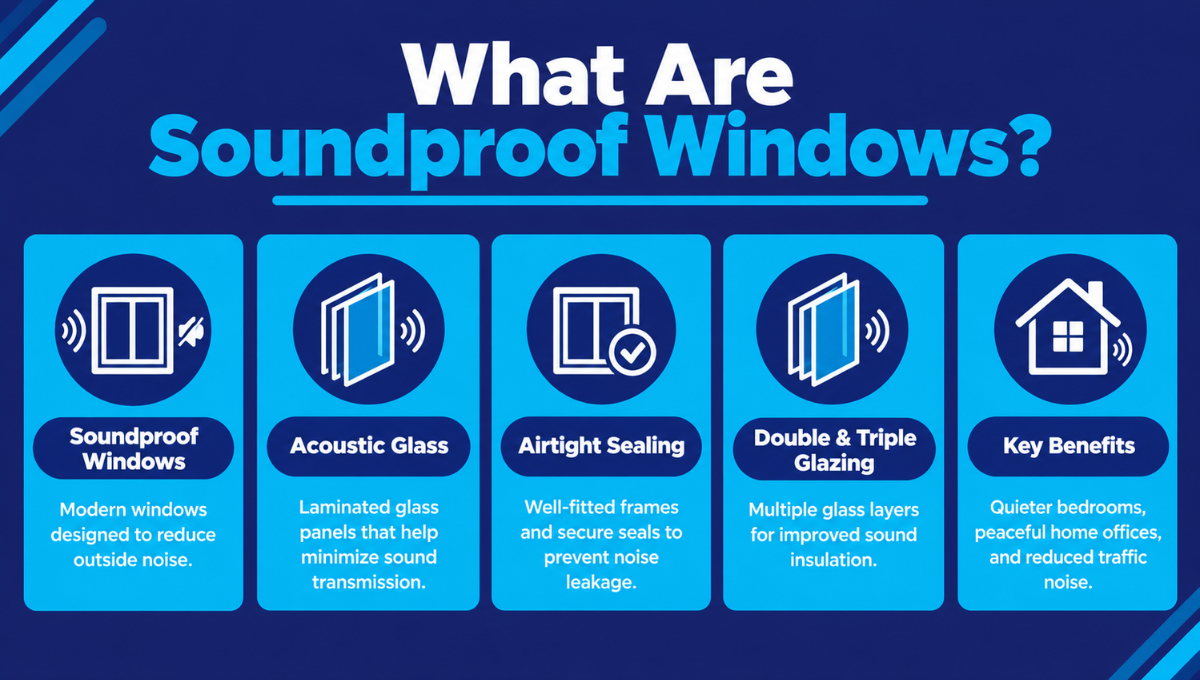
Though we may refer to them as soundproof windows, there is actually no window that can completely block all sounds in our homes. The idea is to reduce the level of sound.
Such windows would be very useful in houses that are located near highways, railways, business areas, and other locations that are quite noisy. Soundproof windows could also improve bedrooms and home offices for purposes such as sleeping and working.
How Do Soundproof Windows Help With Noise Reduction?
A soundproof window works by ensuring a combination of the correct glass and an airtight installation of the frame. Both components work to keep sound from entering your house from outside.
1. Acoustic Glass Reduces Sound Transmission
Noise transfer from outdoors to indoors can occur in many ways, and glass is one of them. An acoustic glass panel acts as a medium for controlling this noise transfer.
Laminated glass windows are made up of two or more glass panels that are held together by the interlayer. Acoustic laminated glass is one in which there is an interlayer that helps improve sound insulation.
A guide on the acoustic qualities of noise control glass explains that the thickness of the glass, lamination, and distance between the panes have an influence.
2. Window Seals Close Gaps
However, even high-quality glass will not be able to achieve its full capacity in terms of reducing noise when sound is transmitted through the gap between the frame and the glass.
The proper seal for the window will help to close these gaps and increase the efficiency of the window itself. When your current window feels drafty, or you can hear traffic through the gaps at the edge of the window, check the seal and alignment.
3. Multiple Glazing Layers Improve Insulation
Both double glazing and triple glazing involve the use of several sheets of glass which are separated by spaces. This may enhance soundproofing, depending on the total glazing structure.
Different glass thicknesses with an appropriate gap could prove to be more effective acoustically than installing another piece of glass altogether. Thus, triple glazing does not necessarily have to be the best choice for all noisy homes.
Which Features Make Windows Better at Blocking Noise?
In comparing noise-reduction windows, pay more attention to their acoustic qualities than to the number of glass panes in the window.
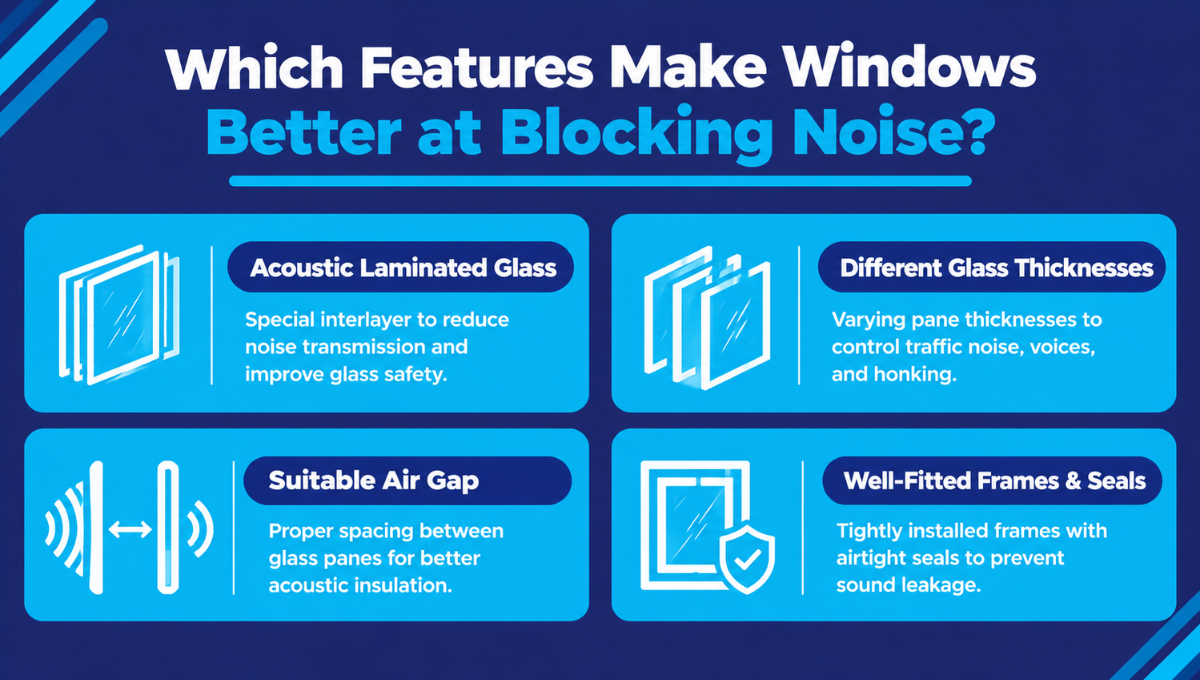
Acoustic Laminated Glass
This can be helpful for houses that face continuous noise from roads or other areas. The particular interlayer helps in preventing the passage of noise, and also the laminated design prevents the breaking of the glass.
Different Glass Thicknesses
Thicker panes can assist in controlling the broader spectrum of sound waves. The reason for this is that low frequencies from traffic thundering and high frequencies from voices or honks may not be controlled by the same glazing system.
A Suitable Air Gap
The gap between the two glass sheets affects the performance of the panel acoustically. The cavity plays an important role in noise control, especially when used with acoustic laminated glass.
Well-Fitted Frames and Seals
The frame should be closed properly with no unnecessary gaps. Frames that have been measured and installed professionally ensure that everything works in agreement.
What Are the Best Window Soundproofing Options?
The right choice will depend on whether you plan to improve your current window installation or change it.
| Option | Best suited for | Main consideration |
| Acoustic double glazing | Homes needing a noise-reduction upgrade | Glass specification and cavity design matter |
| Acoustic triple glazing | Projects requiring combined thermal and acoustic performance | More panes do not guarantee better sound reduction |
| Secondary glazing | Existing windows that are difficult or costly to replace | A suitable gap between the original and secondary window can improve performance |
| Soundproof window film | Certain existing glass surfaces | Standard films generally offer limited noise reduction compared with acoustic glazing |
| Draught-proofing and seal repairs | Windows with noticeable gaps or damaged seals | Helps prevent sound leakage through openings |
Is Secondary Glazing Better Than Replacing Windows?
This involves putting an extra layer of glass inside or behind the original window. This may come in handy, especially in cases involving old buildings where the original windows are very valuable.
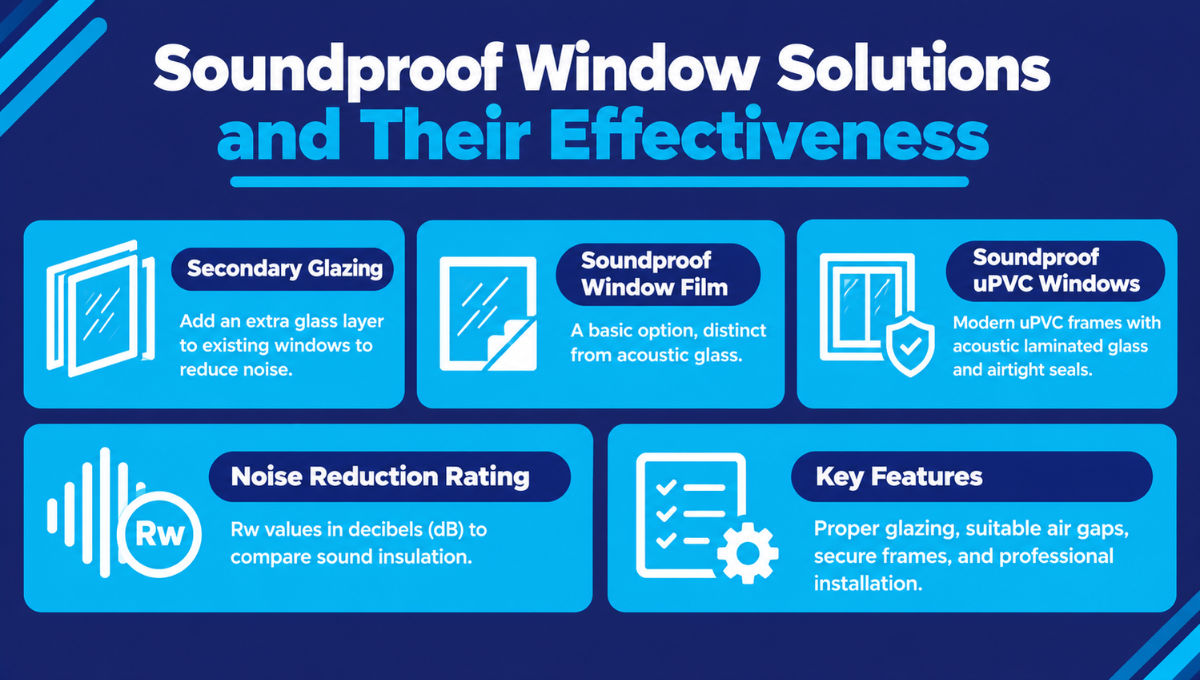
The difference between the two window systems can assist in reducing noise transmission. Nevertheless, the end product will depend on the gap size, glass type, frame structure, and effectiveness of the second window.
Whereas your current frames have been either damaged or difficult to close, replacement would be a better alternative.
Does Soundproof Window Film Work?
It is common to market soundproof window films as an easy means of cutting out external noise. But regular bonding-agent films are no replacement for true acoustic glass.
Before purchasing any film, make sure to see whether the producer provides independent acoustic testing data on that specific product. If reducing noise is your priority, compare the data with other materials like acoustic glass or secondary glazing.
Are Soundproof uPVC Windows a Good Choice?
The soundproofing features of uPVC windows could form an effective solution for people who would like to enjoy both insulation and reduced noise levels at home. Nevertheless, the material alone cannot make windows soundproof.
Glazing specification, sealing, frame design, and installation are all contributing factors. In an environment where there is traffic, acoustic laminated glass installed within a well-sealed uPVC frame might be considered.
When comparing products, request the window’s tested noise reduction value, typically measured in decibels (dB) and written as Rw. The higher the number, the greater the level of sound insulation offered by the product. Inquire if the value is applicable for the entire window combination or only the glass portion of the window.
Indoor noise levels will depend on walls, soundproofing doors, ventilation openings, and other possible sound paths as well.
How Can You Reduce Window Noise Without Replacing Your Windows?
In case replacing is too costly for you, there are some effective steps you can take.
- Fix faulty seals by replacing old seals and testing if the window closes properly.
- Inspect the frame for any loose joints that might create openings through which noise can enter.
- For example, installing a second set of windows could be more beneficial than any simple fix you might undertake yourself.
- Try acoustic curtains: Large and well-made curtains will help to absorb sound and decrease reflections within a room, but will not offer the same level of noise insulation as an acoustic window.
- Inspect nearby doors: If noise is coming from gaps between the outside door or hallway, soundproof doors may also be required.
This strategy works well when the problem is identified and addressed correctly. For instance, putting up curtains would be pointless in dealing with noise coming from a bad seal of the window frame.
What Should You Consider Before Buying Noise-Reduction Windows?
Before deciding on new windows, think about these things.
- Locate the source of the noise problem. Noise from traffic, airplanes, people talking, and construction may have different solutions.
- Inspect existing windows to see whether there is any damage to the seals, frames, or openings.
- A comparison of the acoustic ratings should be done. Request tested Rw(Weighted Sound Reduction Index) values and, if needed, data regarding the frequency range associated with the source of noise.
- Ventilation must be considered. In England, replacement windows may be required to satisfy any background ventilation requirements that apply. Guidance from government addresses providing ventilation while dealing with outdoor noise, which may involve the use of noise-reducing ventilators.
- Inspect the installation. High-quality glass can still disappoint even when the installation process allows leaks.
Ventilation requirements can vary throughout the UK, so make sure to refer to the applicable rules.
How Much Noise Can Soundproof Windows Reduce?
There is not one number for noise reduction in all soundproof windows. It depends on the glass used, the gap between the layers, sealing, framing, installation, and noise frequencies.
There are some special types of glass which have noise reduction ratings that surpass 40 dB, and some of them even go beyond 50 dB. These are specific to certain products and not an assurance that your home will be that many decibels quieter.
To compare your acoustical rating system effectively, ask for the acoustical rating test results of the entire window system. In case noise is a serious problem, an acoustical analysis will assist you in identifying the source of the noise.
How Secure Glaze Can Help With Your Window and Door Solutions
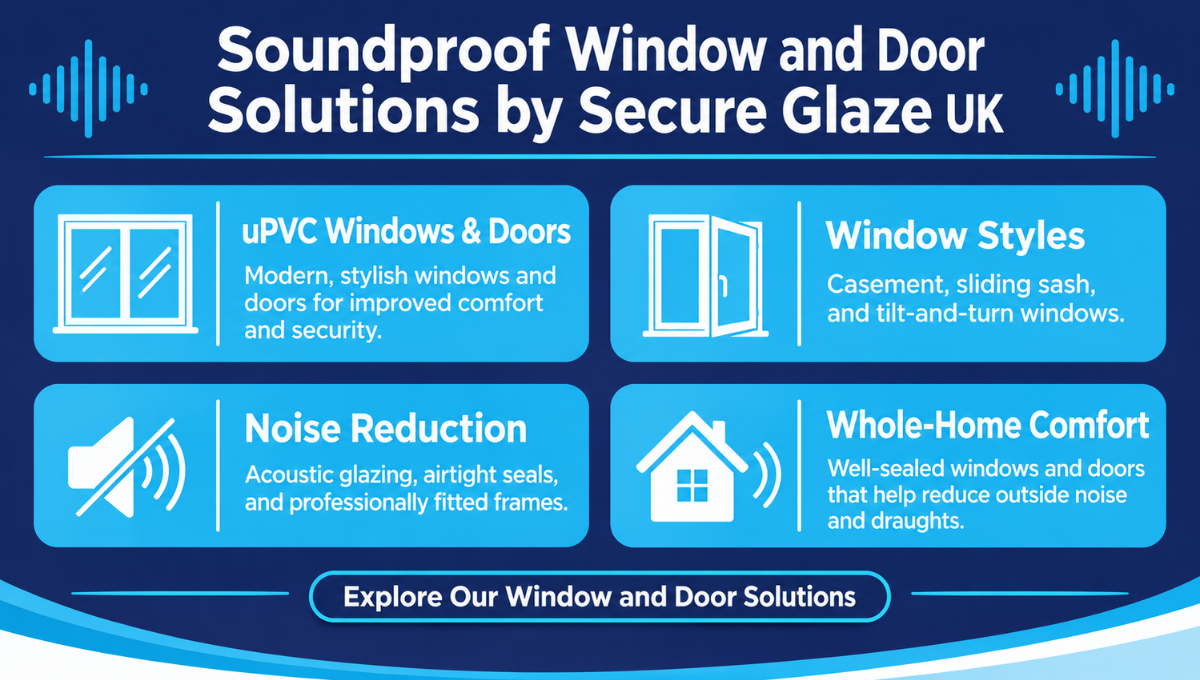
Secure Glaze UK provides installation services for uPVC windows and doors to those who are trying to increase their comfort, safety, and energy efficiency in their homes.
If noise pollution outside is disturbing you, discussing your current windows and what would replace them might give you some insight.
Explore Window and Door Options
Secure Glaze supplies windows such as casement windows, sliding sash windows, and tilt-and-turn windows, along with various types of doors. The best choice for soundproofing would depend on the type of glazing required and the quality of the overall installation.
Consider the Whole Home
Noise may penetrate through materials other than glass. After upgrading your windows, it’s best to address draughty windows and door seals. Secure Glaze has different kinds of windows and doors and a blog with tips on how to choose, maintain, and improve them.
Conclusion
Acoustic windows will make your house more comfortable by minimizing traffic noise and other noise coming from your surroundings. Instead of choosing the number of panes in your windows, choose to concentrate on the quality of the window glass, the right glazing gap, and proper seals.
Begin with an assessment of your current windows to find out where the noise is coming from. From there, you can review the acoustics and decide which windows are right for your home.
Contact us today to explore our soundproof window options and find the right solution for your home.
FAQs
Do soundproof windows completely block outside noise?
No. Soundproof windows block external sounds, yet some sounds might still come through walls, doors, and ventilated areas.
Are soundproof uPVC windows better than standard double glazing?
However, for soundproofing to be more effective, one may use acoustic glass in conjunction with well-sealed uPVC windows, although the efficiency will be determined by the window itself.
Can I soundproof my existing windows without replacing them?
Yes. Window noise can be reduced through seal repairs, secondary glazing, or the use of acoustic curtains. Regular window film will not provide much noise reduction.