Summary: Choosing the right windows will give you a better-looking home, more comfort, and improved energy efficiency. This guide will explain the different types of windows available in the UK. You will learn about the styles, materials, and opening functionality.
Types of Windows: A Complete UK Guide to Styles, Materials and Openings
Choosing the right windows can enhance your home’s appearance, comfort, natural light, and energy efficiency. With so many window types available, understanding their features can help you select the best option for your home.
In the UK, several types of house windows are available, including casement, sash, tilt and turn, bay, bow, sliding, and roof windows. Each has its own opening style, materials, and benefits. This guide explores these window types, their frame materials, opening options, and key factors to consider when choosing new windows.
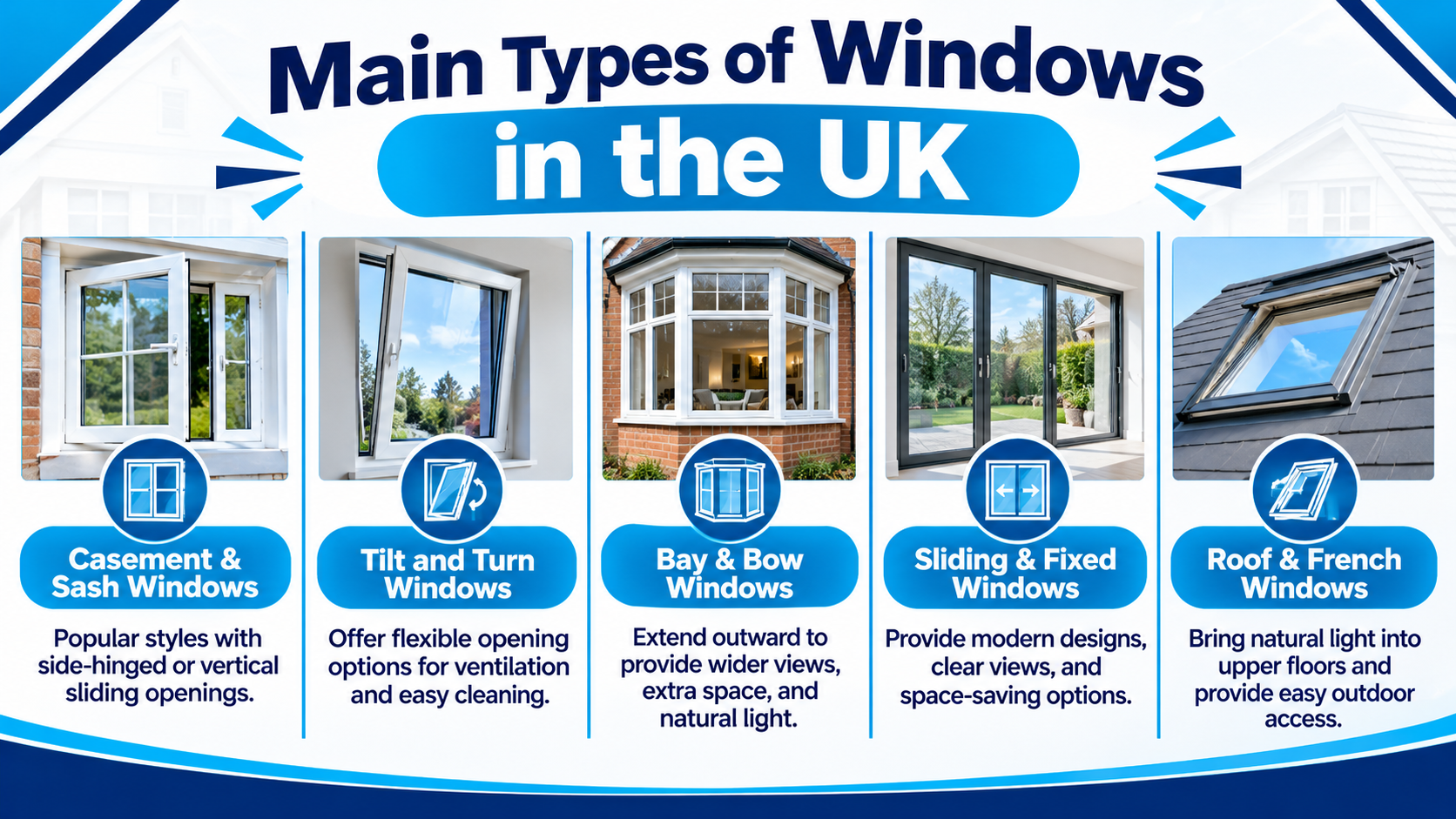
The main window types available in the UK include casement, sash, tilt and turn, bay, bow, sliding, and roof windows. The right choice depends on your property’s style, available space, airflow, budget, energy efficiency, and preferred window configurations.
What Are the Main Types of Windows in the UK?
There are several types of primary windows. These can include inward- or outward-opening windows, sliding windows, which can move vertically or horizontally, and fixed windows, which only let light in.
1. Casement Windows
Casement windows are one of the most common window styles in houses in the UK. They have one side that is hinged and can be opened either inwardly or outwardly.
Key features:
- uPVC, aluminium and wood options.
- Good airflow and light.
- Simple to open and close.
- They can be used in both traditional and modern properties.
They make a great option for bedrooms, kitchens and living rooms.
2. Sash Windows
Sash windows open using a vertical sliding mechanism. This means that one or both parts of the window slide up and down inside the frame.
Sash Windows can be commonly found on traditional and classical properties but are also available in modern uPVC and aluminium styles.
Key features:
- Open vertically within the frame.
- Suit traditional and period properties.
- Do not require outward opening space.
- Available with modern double glazing.
3. Tilt and Turn Windows
Tilt and turn windows can be opened to provide ventilation by tilting inward at the top or fully opening from the side.
Key Features:
- Double opening
- Controlled ventilation
- Easier to clean the external glass
- Ideal for flats and modern properties
Requires adequate space inside when fully opened.
4. Bay Windows
A bay window is an external extension of the main wall of the property. Usually there are 3 or more panels at varying angles. This provides more natural light from various angles and creates more inside space.
Key Features:
- More external space to view from.
- More natural light in the rooms.
- Gives more architectural interest.
- Provides extra space for seating.
Commonly found on traditional and classic properties.
5. Bow Windows
Slightly similar to bay windows, bow windows are most commonly made up of 4 or more sections. The design is curved, making them provide a wider outlook and a softer look.
Key Features:
- Curve outwards
- Contain multiple sections
- Provide light from multiple angles
- Suit both traditional and modern houses.
The main difference between bay and bow windows is that the bow windows have curved sections, whereas bay windows have angled sections.
6. Sliding Windows
Sliding windows move horizontally. They do not need any extra space as one panel slides over the other.
Key Features:
- Side-to-side motion.
- Can be used for large window openings.
- No swing space required.
- Clean, modern look.
However, the opening area is usually limited to the section that slides.
7. Fixed Windows
Fixed windows are not able to open; their main function is to let natural light in and give a clear view to the outside.
Key Features:
- No opening mechanism.
- Clear outside views.
- Large glass pane fit.
- Fewer moving parts.
They are commonly used in living rooms, staircases, and extensions.
8. Roof Windows and Skylights
Roof windows and skylights are used to help add natural light into areas like loft conversions, attics, and upper-floor extensions. They are fixed onto the roof instead of a vertical wall.
Key Features:
- Add more light to dark rooms.
- Ideal for lofts and attic rooms.
- Fixed and opening options.
- Provide ventilation if using an opening window.
Consider roof structure, waterproofing, insulation, and cleaning access before installation.
9. French Windows
French windows have two glass panes and are usually opened by opening both into the centre, giving a large opening between inside areas and gardens, patios or balconies.
Key features:
- Two hinged panes
- Large outdoor access
- Plenty of natural light
- Suit both traditional and modern homes
They are particularly useful for living and dining areas with garden access.
What Are the Different Window Frame Materials?
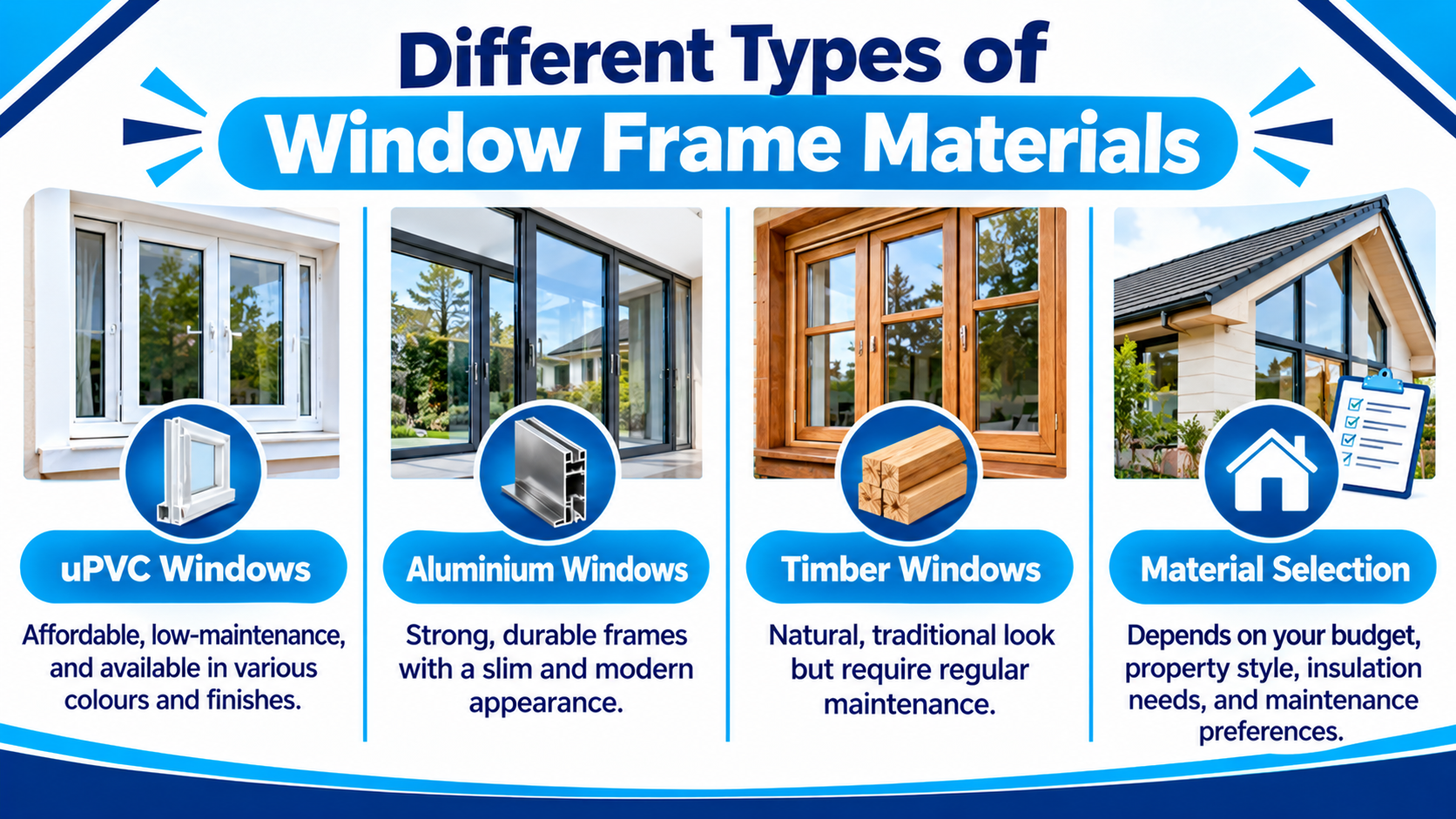
The material used to make a window frame will impact the look, ease of maintenance, longevity, insulation, and cost. In the UK, there are 3 main options available: uPVC, aluminium and wood.
 uPVC Windows
uPVC windows are a popular choice due to them generally being affordable, low maintenance, and having many colour and finish options. They don’t need repainting regularly and can fit many different properties.
Aluminium Windows
Aluminium windows have thin frames, strength, and a modern look. They will suit the modern home well, but can be more expensive than standard uPVC options.
Timber Windows
Timber windows give a natural feel and are ideal for traditional and period properties. They can be painted or stained but do require regular maintenance to prevent water damage and weathering.
Comparison of Window Materials
| Material | Main advantage | Main consideration |
| uPVC | Affordable and low maintenance | Bulkier frame appearance |
| Aluminium | Strong and modern design | Higher initial cost |
| Timber | Natural and traditional appearance | Regular maintenance |
The best material depends on your budget, property style, and maintenance preferences.
What Are the Different Types of Window Openings?
When choosing between different types of windows in the UK, it helps to understand how different types of windows open and operate.
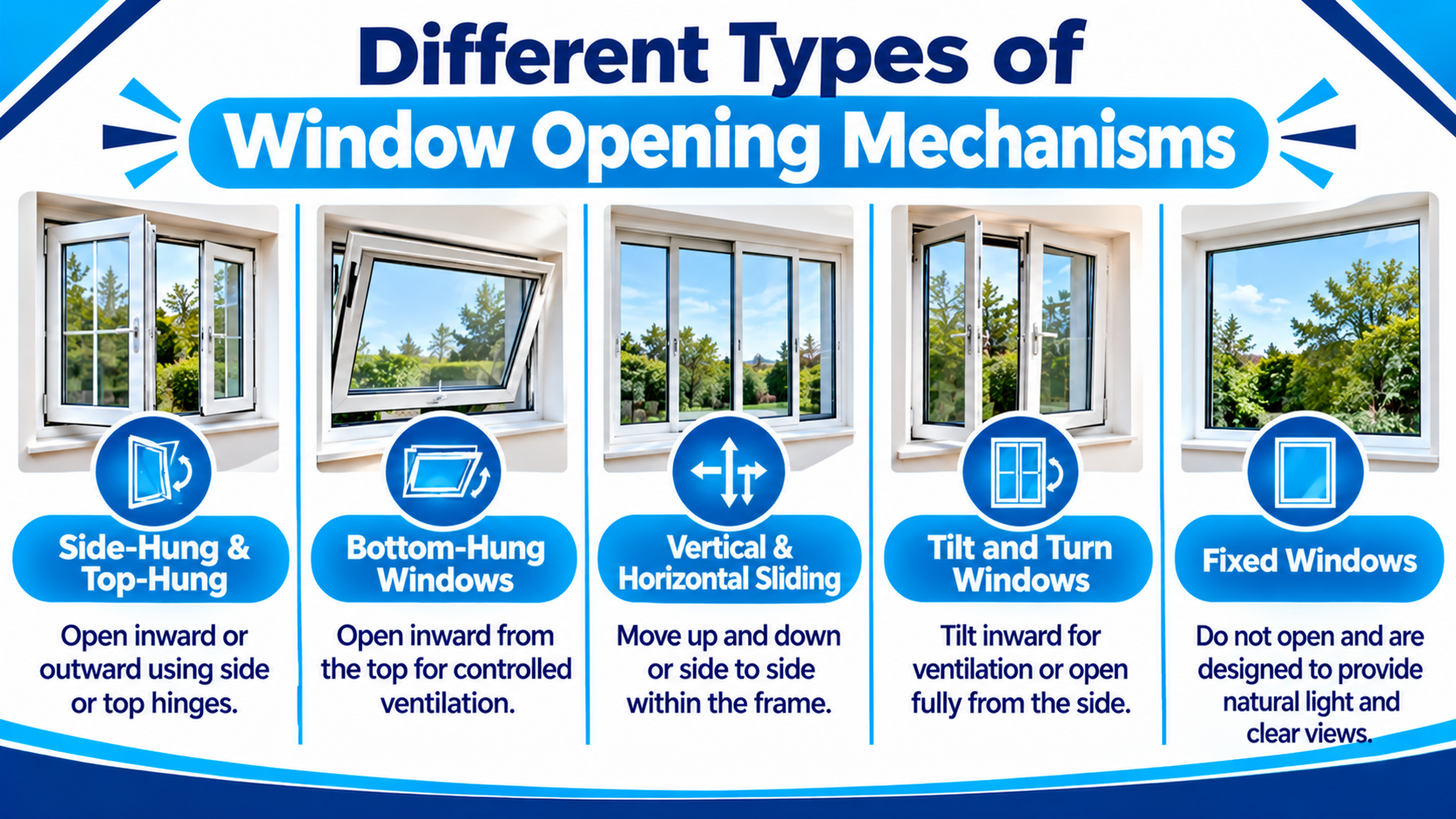
This will help you select the right option based on your room layout and ventilation needs.
There are several options:
- Side hung – opens vertically either inward or outward.
- Top hung – opens outward from the bottom with the top hinged.
- Bottom hung – opens inward from the top with the bottom hinged.
- Vertical sliding – slides upward within the frame.
- Horizontal sliding – slides sideways within a track.
- Tilt and turn – tilts inward from the top and can also be opened fully from the side.
- Fixed – cannot be opened.
Consider the available space, ventilation needs, and accessibility when selecting an opening mechanism.
How Do You Choose the Right Window Style for Your Home?
The right window styles for houses depend on your property’s design, room layout, ventilation requirements, and budget.
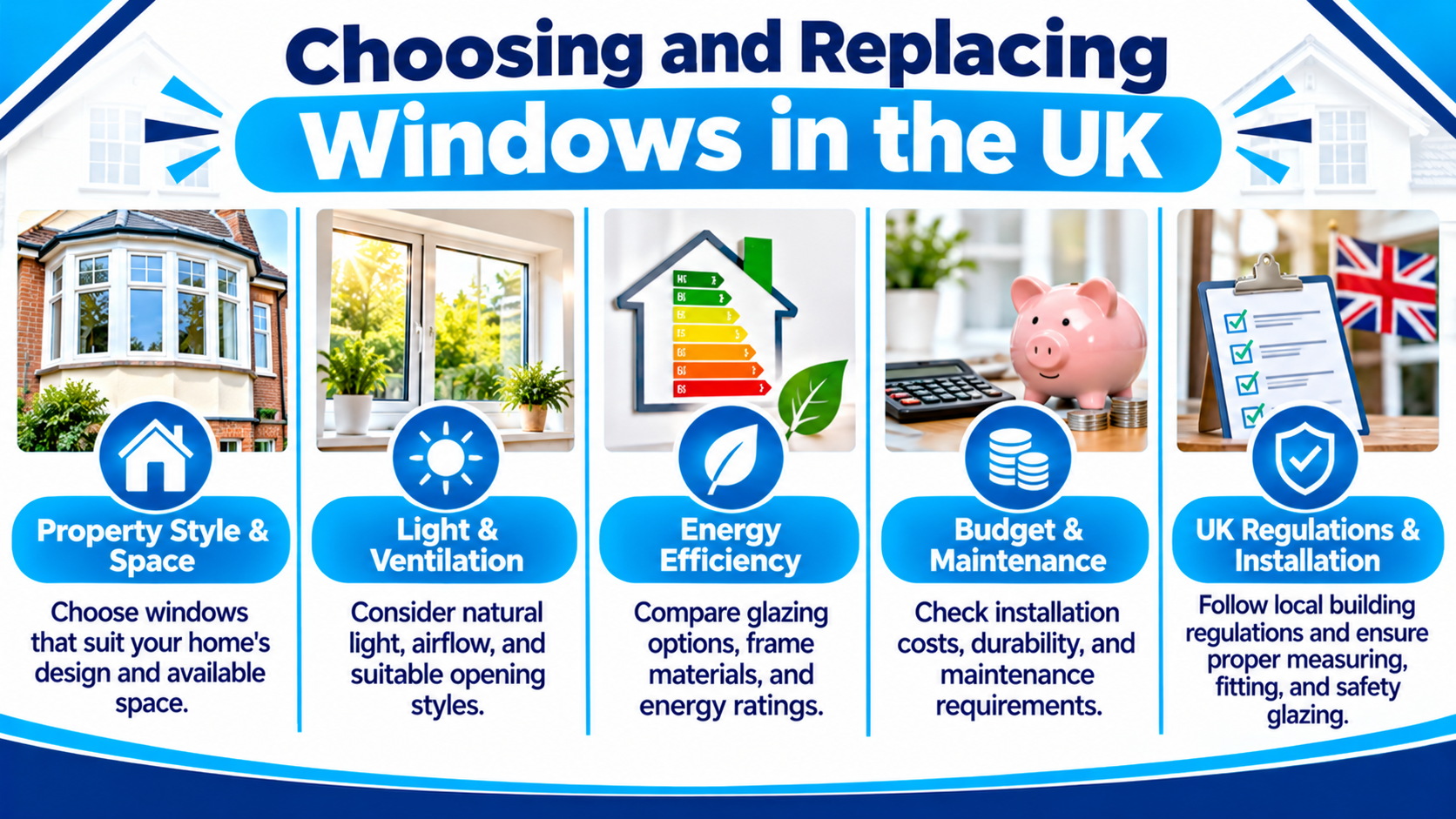 1. Property Style
Ensure you choose the right style to match your home. Sash windows are great for Victorian and Georgian properties whilst casement and aluminium windows look great in modern houses.
2. Available Space
Casement windows open outwards, so you need external space. Tilt and Turn windows open inwards. Sliding windows can be useful if you have limited opening space.
3. Natural Light and Ventilation
Large glass windows will help light up darker rooms. Opening windows will let fresh air into the room. Casement windows will give a larger opening, but fixed windows will just give light.
4. Energy Efficiency
The whole window system, including double or triple glazing, glass type, frame, and installation, will impact performance. You should always compare the energy rating of windows. The British Fenestration Rating Council (BFRC) offers Window Energy Ratings.
5. Maintenance and Budget
uPVC generally requires less maintenance than timber, while aluminium offers strength and slim frames. Compare the complete installation cost, including glazing, hardware, fitting, and additional work.
What Should You Know Before Replacing Windows in the UK?
Replacement windows should be chosen with consideration for building regulations, including energy efficiency, ventilation and safety.
Building Regulations
- Replacement windows should be suitable for the area they are being installed in. Ensuring that they will meet any energy efficiency, ventilation and safety regulations.
- Ventilation
- Ensure that new windows will offer good ventilation. Guidance can be found in Approved Document F for buildings in England.
- Safety Glazing
- Consider the correct safety glazing for areas where accidental contact with glass could occur.
- Planning Permission
- Listed buildings and those located within a conservation area may have restrictions on changing your windows.
- Correct Measuring, Fitting and Sealing
- By measuring correctly, fitting with the right fittings and sealing the windows will work as intended.
Building regulations differ across England, Scotland, Wales, and Northern Ireland, so check the requirements for your location before starting work.
How Secure Glaze Can Help With Your Window Requirements
Choosing the right windows can be an important task. However, Secure Glaze can help you understand what options are available to complement your property.
It is important to select the right design and installation for your windows, whether you are looking to get modern window designs, replace your current window frames, or simply improve your home.
You may also wish to look at other improvements you can make to your property, such as uPVC window repairs, door improvements, and glazing.
Visit our blog to learn more about different window types, door options, and simple ways to improve and maintain your home.
Conclusion
There are a wide variety of windows available within the UK. Each has its own advantages and will be suited to your needs. Casement, Sash, Tilt and Turn, Bay Bow, Sliding and Roof windows are all great for different properties.
When selecting your window, consider how they open, frame type, glass, upkeep, and energy efficiency.
Looking to install, repair, or replace your windows? Contact us today to discuss your requirements and find the right solution for your home.
FAQs
What is the most common type of window in the UK?
Casement windows are one of the most popular options in the UK. They’re easy to open and provide excellent ventilation. They’ll also fit well with a variety of properties.
Which window style is best for a modern house?
Tilt and turn, sliding, casement, and aluminium windows are popular choices for a modern home. Which is best for you will depend on your available space, aesthetics, and ventilation requirements.
Are uPVC windows better than aluminium windows?
uPVC windows are cheaper and easier to maintain, whereas aluminium windows are stronger and offer a sleek modern look.