Summary: Explore different types of bay and bow windows, understand their key differences and benefits, and see how they can add natural light, extra space, and visual appeal to your home. Get helpful tips to choose the right style for your property.
Bay and Bow Windows: A Guide to Styles, Differences, and Choosing the Right One
Bay and bow windows are popular with UK homeowners as they allow natural light into a property and improve its appearance. They both project outwards from the external wall but have different shapes.
Know their differences to help you pick the best window for your home, space and personal preferences. In this guide, we will look at design, benefits, types of glazing and things to consider when installing.
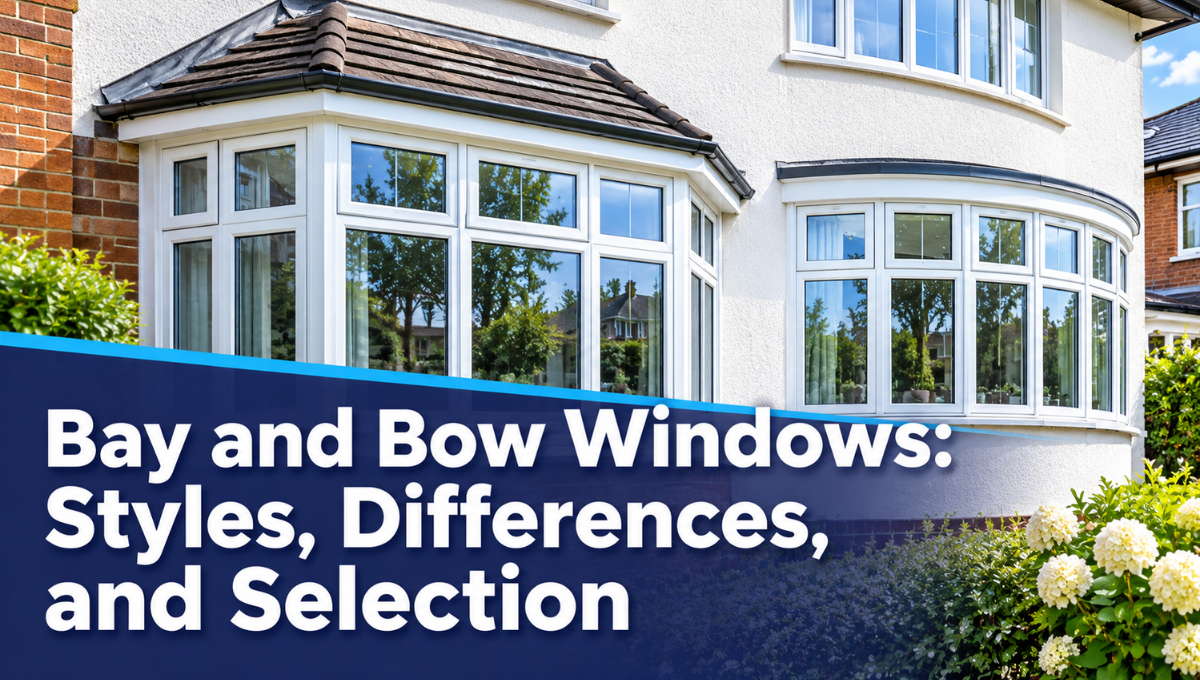
Bay windows are typically made up of 3 or more angled panes. Bow windows have several panes, which are slightly curved. Both can provide natural light and help to enhance your property. They will depend on the available space, style, and budget.
What Are Bay and Bow Windows?
Bay and bow windows are projecting window styles that add extra depth to the interior space of a property while allowing light to come into the room from several angles.
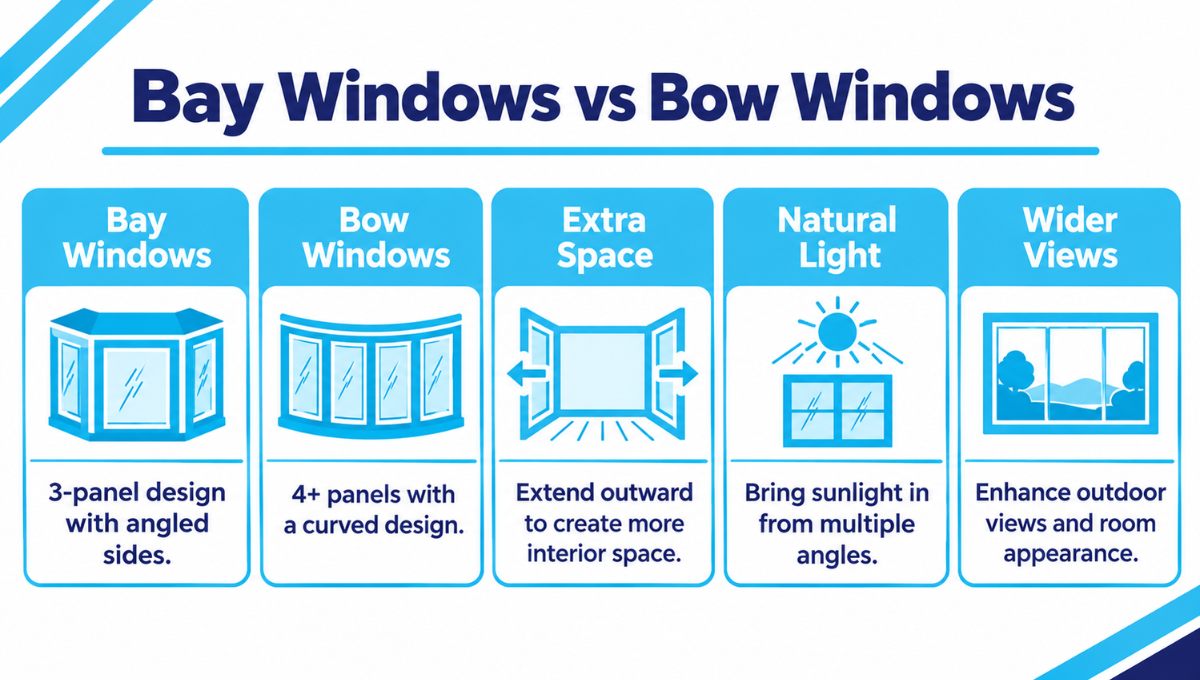 However, their structures are different.
What Is a Bay Window?
This type of window has 3 or more panels that project from a wall. The most common is a large window in the middle with two angled windows on either side.
Bay windows are common in Victorian, Edwardian, and 1930s UK homes. They are often used in living rooms, dining areas, and bedrooms to bring in more natural light and add visual appeal.
What Is a Bow Window?
A bow window will have 4 or more panes of glass set at a gentle angle to give an attractive curved look instead of the traditional bay.
They provide greater views from outside and light from various angles. They are great for large living rooms and a home that has a softer feel.
Bay Window vs Bow Window: What Are the Main Differences?
Bay windows have sloped panels, whereas bow windows have several panels that create a soft curve.
| Features | Bay Windows | Bow Windows |
| Shape | Angular projection | Gentle curved projection |
| Panels | Usually 3 or more | Usually 4 or more |
| Appearance | Defined and structured | Rounded and elegant |
| Interior space | Often creates a deeper recess | Creates a wider curved recess |
| Natural light | Enters from multiple directions | Spreads across a wider curved area |
| Best suited for | Traditional and modern homes | Traditional and contemporary homes |
Both can give your property a nice aesthetic, but it will depend on how much wall space you have and how you want to set up the interior.
What Are the Different Types of Bay Windows?
There are several types of bay windows available. Choosing the correct type will depend on your property and the space you have available.
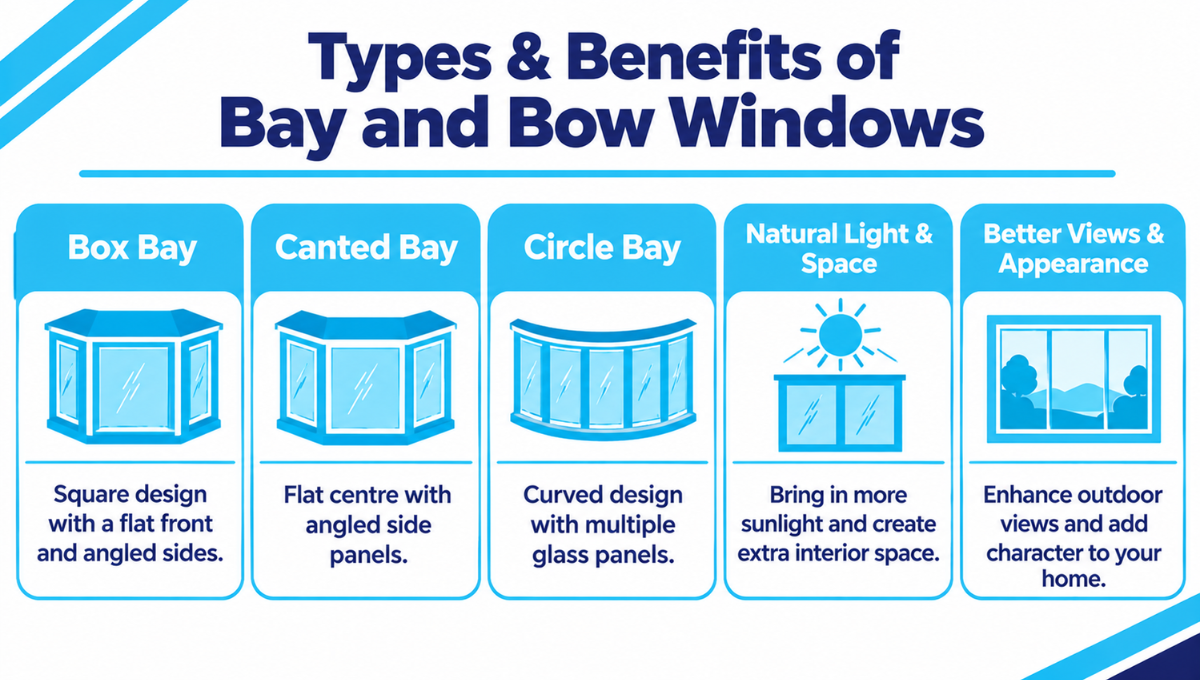 1. Box Bay Windows
The box bay window has a flat front with two side panels, both at a right angle. This gives it a square or rectangular shape. It has extra room for seating, decoration, and indoor plants.
2. Canted Bay Windows
Canted bay windows have straight centre panels with angled sides (usually 30 or 45 degrees). They are a traditional style that is very popular in Victorian, Edwardian and 1930s houses.
3. Circle Bay Windows
Circular bay windows have several panels that form a circular design. A gentler style than box or canted bay windows. They can sometimes be tricky to measure and fit due to their curved design.
What Are the Main Benefits of Bay and Bow Windows?
Both options provide functional and aesthetic benefits, but it will depend on the size, placement, glazing, and quality of window installation.
More Natural Light
As the windows project outside the external walls, multiple panels of glass can be used to collect natural light from multiple angles, which helps light up areas such as living rooms, bedrooms, and other areas with little natural light.
A More Spacious Interior
Bay and bow windows provide extra internal space, which can be used for window seats, reading spaces, storage and/or planting. The amount of space will depend on the bay/bow window design and depth.
Improved Exterior Appearance
They also add character to your property. Bay windows give a more definite traditional look whilst bow windows have a gentler curved shape.
Both styles can be a good fit for certain properties. The window frames, colours and proportions will all work well with the structure.
Wider Outdoor Views
The projecting design allows for more viewing angles than a typical flat window. Bow windows can help give a wider view due to their curved design.
Which Window Materials and Glazing Options Should You Consider?
Bay window ideas, including frame materials and glazing options, can affect your window’s appearance, maintenance, energy efficiency, and overall cost.
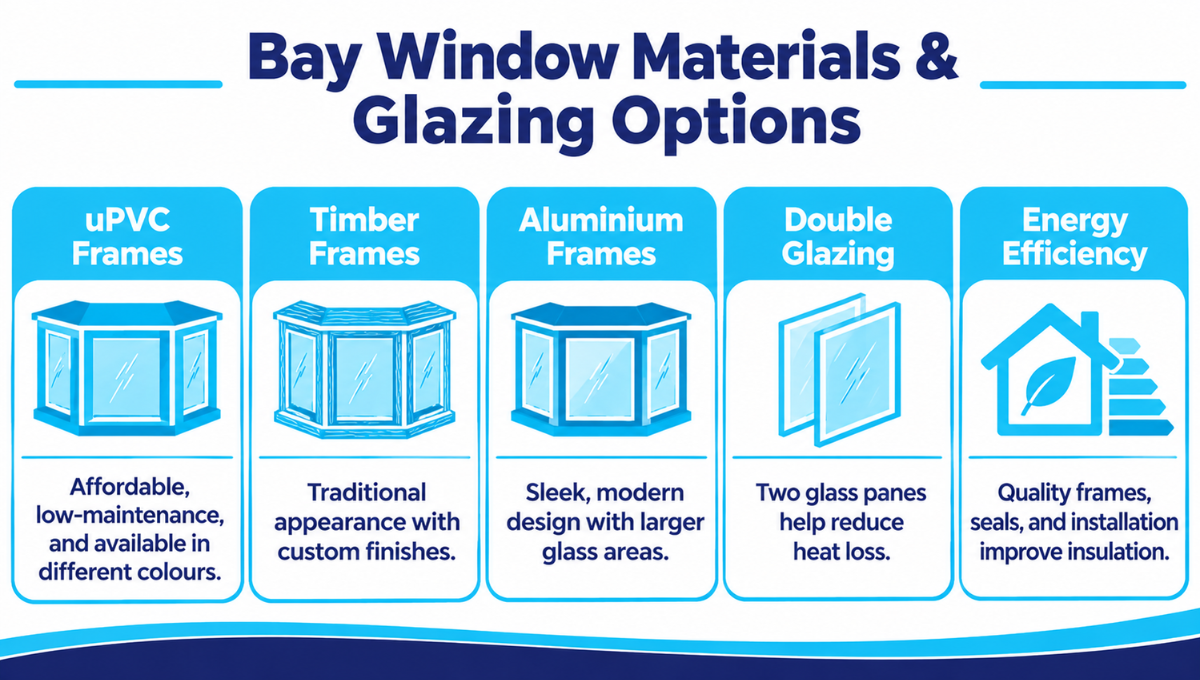 uPVC Bay Windows
uPVC bay windows are a great choice if you want an affordable, low-maintenance option. They come in a variety of colours and can easily be matched to your current windows and outside.
They can also be provided with modern double glazing for improved thermal efficiency.
Timber Windows
Timber frame windows can provide a traditional look which is ideal for period properties or homes with classical features. They can be painted or stained to give a range of finishes but will generally require more maintenance than uPVC.
Aluminium Windows
Aluminium can offer a sleek and modern look. It can be used in certain designs to provide more glass space. Often used in more modern properties.
Double Glazed Bay Windows
Double glazed bay windows have two panes of glass with an airtight gap between. This will help reduce heat loss through your window. For improved energy efficiency, you should also think about the quality of the frame, seals, and installation you have.
How Much Do Bay and Bow Windows Cost in the UK?
The price of bay and bow windows will depend on their size, number of panels, type of frame material, glazing and installation requirements.
The 2026 price guide shows that standard white uPVC styles can be supplied and fitted for:
| Window Design | Estimated Cost |
| 3-section bay | £1,000–£1,400 |
| 4-section bay | £1,500–£1,800 |
| 5-section bay | £1,900–£2,400 |
| 3-section bow | £1,100–£1,400 |
| 4-section bow | £1,500–£1,800 |
| 5-section bow | £1,900–£2,300 |
Prices are an estimate. Custom designs, high-quality materials, structural modifications, and additional finish work can all cause the price to increase.
Before accepting a quote, you should make sure it includes:
- Fitting window frames and glass units
- Removing old windows
- Labour and fitting costs
- Structural work
- Interior and exterior finishes
By comparing detailed quotes from installers, you can get a better idea of what the total cost will be.
What Should You Consider Before Choosing Bay or Bow Windows?
Along with selecting the ideal aesthetic style, here are some important factors to consider when choosing the design of your windows:
- Space: Measure the size of your room and how far you can project the window without impacting your furniture.
- Style: Ensure the design of your windows fits with your home’s architecture.
- Light: Consider where your windows will be positioned and how much natural light you would like.
- Frame material: Consider the maintenance, style, and cost of your uPVC, wooden, or aluminium frames.
- Glazing: Ensure there is adequate insulation, sound reduction, and security.
- Installation: Check that the existing structure can hold the new window design.
- Cost: Consider the cost of installation, finishing, and any extra costs to the structure.
Do You Need Planning Permission?
Replacement of windows with similar design windows will generally not require planning permission. Adding a new bay window may be considered an extension and planning permission may be required.
If you are working on listed buildings, in conservation areas or buildings with planning conditions, extra restrictions may apply. Speak to your local planning authority before doing any structural work.
Do Bay and Bow Windows Require Structural Support?
Yes, they will need adequate support to hold their weight plus any loads above them. This will depend on your building’s structure and window design.
If you are making an entirely new opening or changing the current structure, then the support requirements should be checked by a suitably qualified professional prior to installation.
What Building Regulations Apply to Replacement Windows?
Replacement windows in the UK must meet building regulations for energy efficiency, ventilation, safety, and emergency escape.
Using an installer registered with a recognised scheme can help ensure the work meets regulations and comes with the required certification.
How Can You Maintain Bay and Bow Windows?
Regular maintenance will keep your windows looking great and running smoothly. Depending on the type of window frames you have.
There are some simple steps you can take to keep them in good condition.
- Use an appropriate glass cleaner and a microfibre cloth to wipe down the glass.
- Check for any visible damage to the frame.
- Check that the seals are not damaged and causing draughts or damp to get in.
- Clear out any debris blocking the drainage channels.
- Check that the hinges and handles are working smoothly.
If you are experiencing condensation between the panes, damaged seals or issues opening your windows, then have a professional look at them.
How Secure Glaze UK Can Help With Your Window Requirements
We offer a wide range of windows that will complement your property, glazing requirements, thermal performance, and ease of maintenance.
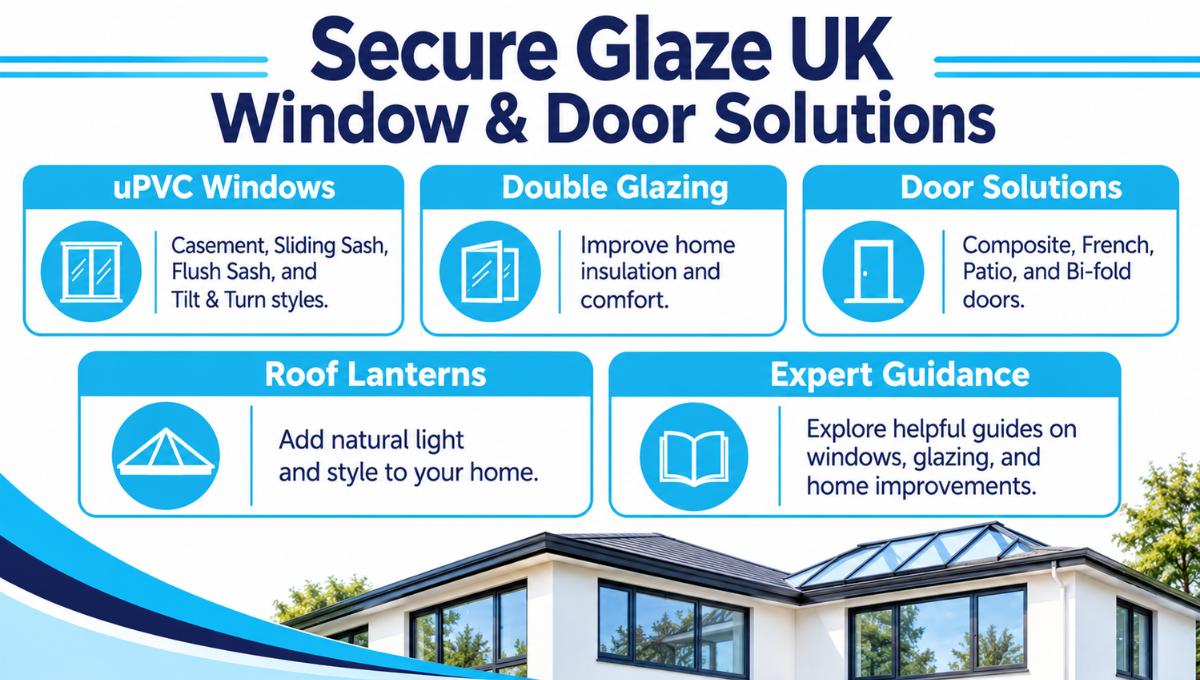 We provide window and door solutions to increase comfort, style, and security in UK homes. Knowing your options can help when upgrading your old windows or improving your home.
uPVC Windows and Double Glazing
Secure Glaze UK offers Casement, Sliding Sash, Flush Sash and Tilt and Turn uPVC window styles to match both traditional and contemporary style properties. Double glazing is available to provide increased insulation to create a more comfortable home.
Other Home Improvement Solutions
Secure Glaze UK also offers home improvement products, including composite doors, French and patio doors, bi-fold doors, and roof lanterns.
Explore our blog for helpful guides, practical tips, and useful information on window styles, glazing options, and home improvements to help you make informed decisions.
Conclusion
A bay window or bow window can help to increase natural lighting, internal space, and enhance the look of your home. Bay windows are more angular, whereas bow windows provide a sleek curve. Consider the style, space, glazing, materials, and fitting costs for both.
Select a design that will best match your property and lifestyle. Secure Glaze UK can provide the perfect windows and doors for your home.
Contact Us to discuss your window requirements and explore the available options.
FAQs
1. What is the main difference between bay and bow windows?
Bay windows usually have three or more panes set at sharper angles. Bow windows have four or more panes set so they curve gently.
2. Are uPVC bay windows a good choice for UK homes?
Yes, they are a popular choice as they are low maintenance, you can choose from a variety of designs, and they will fit with your modern double glazing.
3. Are bay windows more expensive than bow windows?
Not necessarily. Costs depend on the number of panels, materials, glazing, size, and installation requirements. Bespoke designs can also affect the final price.